Ch. 16 The Endocrine System
Amerman- Human Anatomy & Physiology 3e
Amerman3rd EditionHuman Anatomy & PhysiologyISBN: 9780138247201, 9780138247928, 9780138201814Not the one you use?Change textbook
Chapter 16, Problem 15

Describe the components of the hypothalamic-pituitary-adrenocortical axis, and explain how it regulates secretion from the adrenal gland.

Verified step by step guidance
1
The hypothalamic-pituitary-adrenocortical (HPA) axis is a major neuroendocrine system that regulates stress responses, energy metabolism, and immune function. It involves three primary components: the hypothalamus, the pituitary gland, and the adrenal glands.
The hypothalamus, located in the brain, releases corticotropin-releasing hormone (CRH) in response to stress or other stimuli. CRH travels through the hypophyseal portal system to the anterior pituitary gland.
The anterior pituitary gland responds to CRH by secreting adrenocorticotropic hormone (ACTH) into the bloodstream. ACTH acts as a signaling molecule that targets the adrenal glands, located on top of the kidneys.
The adrenal glands consist of two main regions: the adrenal cortex and the adrenal medulla. ACTH specifically stimulates the adrenal cortex to produce and release glucocorticoids, such as cortisol, which play a key role in stress response, metabolism, and immune regulation.
Cortisol exerts negative feedback on both the hypothalamus and the anterior pituitary gland, reducing the secretion of CRH and ACTH to maintain homeostasis and prevent excessive hormone production. This feedback loop ensures the HPA axis remains balanced.

Verified video answer for a similar problem:

This video solution was recommended by our tutors as helpful for the problem above.
Was this helpful?

Key Concepts

Here are the essential concepts you must grasp in order to answer the question correctly.

Hypothalamic-Pituitary-Adrenocortical Axis (HPA Axis)

The HPA axis is a complex set of interactions among the hypothalamus, pituitary gland, and adrenal glands that regulates stress response and various bodily functions. It begins with the hypothalamus releasing corticotropin-releasing hormone (CRH), which stimulates the pituitary gland to secrete adrenocorticotropic hormone (ACTH). This hormone then prompts the adrenal glands to produce cortisol, a key stress hormone.
Recommended video:
Guided course
6:11
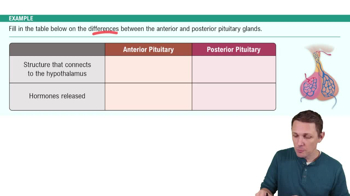
The Hypothalamus and Pituitary Gland Example 3

Corticotropin-Releasing Hormone (CRH)

CRH is a peptide hormone produced by the hypothalamus that plays a crucial role in the stress response. It is released into the bloodstream and acts on the anterior pituitary gland to stimulate the secretion of ACTH. Elevated levels of CRH are typically associated with stress, leading to a cascade of hormonal changes that prepare the body to respond to stressors.
Recommended video:
Guided course
13:06
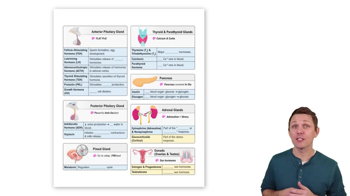
Review of Major Hormones

Adrenal Gland Function

The adrenal glands, located on top of each kidney, are responsible for producing various hormones, including cortisol, adrenaline, and aldosterone. In the context of the HPA axis, cortisol is particularly important as it helps regulate metabolism, immune response, and blood pressure, while also playing a role in the body's response to stress. The secretion of these hormones is tightly regulated by feedback mechanisms involving the hypothalamus and pituitary gland.
Recommended video:
Guided course
3:02
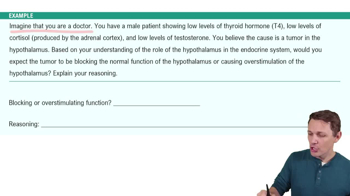
The Hypothalamus and Pituitary Gland Example 2