Ch. 15 The Special Senses
Amerman- Human Anatomy & Physiology 3e
Amerman3rd EditionHuman Anatomy & PhysiologyISBN: 9780138247201, 9780138247928, 9780138201814Not the one you use?Change textbook
Chapter 15, Problem L3.6

Your 60-year-old patient, Mr. Guster, has Bell's palsy, which causes dysfunction of those portions of the facial nerve that control muscles of facial expression. He is surprised when you tell him to tape the eyelids of his right eye closed at night to prevent dryness. Why might Bell's palsy cause dryness of the eye on the affected side?

Verified step by step guidance
1
Understand that Bell's palsy is a condition that affects the facial nerve (cranial nerve VII), which controls muscles of facial expression and has additional roles in tear production and eyelid closure.
Recognize that the facial nerve also innervates the orbicularis oculi muscle, which is responsible for closing the eyelids. Dysfunction of this nerve can lead to an inability to fully close the eyelid on the affected side.
Explain that when the eyelid cannot close properly, the eye is exposed to the environment for extended periods, leading to reduced protection and increased evaporation of the tear film, which causes dryness.
Note that the facial nerve also plays a role in stimulating the lacrimal gland to produce tears. If this function is impaired, tear production may be reduced, further contributing to dryness of the eye.
Conclude that taping the eyelid closed at night helps protect the eye from exposure and prevents excessive dryness by maintaining moisture and reducing evaporation during sleep.

Verified video answer for a similar problem:

This video solution was recommended by our tutors as helpful for the problem above.
Was this helpful?

Key Concepts

Here are the essential concepts you must grasp in order to answer the question correctly.

Facial Nerve Function

The facial nerve (cranial nerve VII) is responsible for controlling the muscles of facial expression, as well as providing sensory functions and autonomic functions such as tear production. In Bell's palsy, inflammation or damage to this nerve can lead to weakness or paralysis of the facial muscles, affecting the ability to blink and close the eye properly, which can result in dryness.
Recommended video:
Guided course
6:30
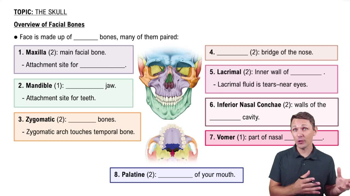
Overview of Facial Bones

Tear Production and Distribution

Tears are produced by the lacrimal glands and are essential for maintaining eye moisture and health. The facial nerve plays a role in stimulating these glands. When Bell's palsy affects the facial nerve, it can disrupt the normal production and distribution of tears, leading to dryness in the affected eye due to inadequate lubrication.
Recommended video:
07:25
Total Products for Each Stage of Aerobic Cellular Respiration

Protective Mechanisms of the Eye

The eyelids serve as a protective barrier for the eyes, helping to keep them moist and shielded from environmental irritants. In cases of Bell's palsy, the inability to fully close the eyelid on the affected side can expose the cornea to air and debris, increasing the risk of dryness and potential damage, necessitating measures like taping the eyelid closed at night.
Recommended video:
Guided course
02:59
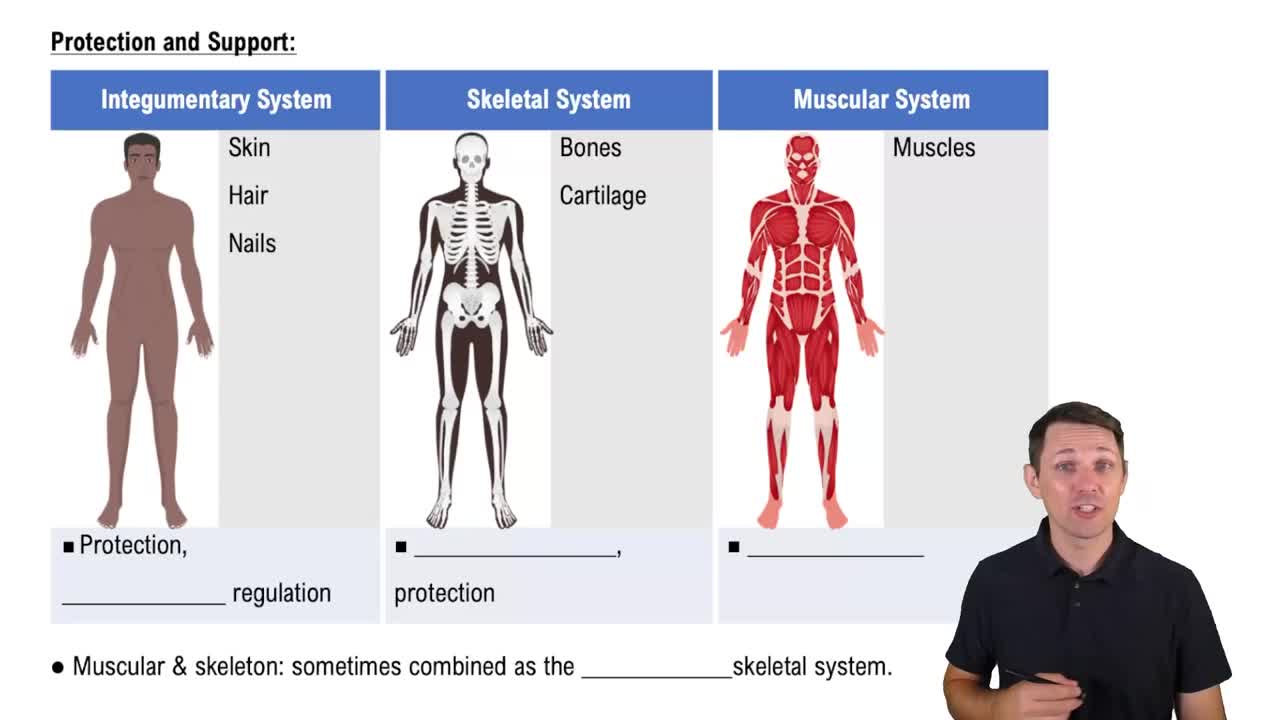
Protection and Support