Ch. 14 The Autonomic Nervous System and Homeostasis
Amerman- Human Anatomy & Physiology 3e
Amerman3rd EditionHuman Anatomy & PhysiologyISBN: 9780138247201, 9780138247928, 9780138201814Not the one you use?Change textbook
Chapter 14, Problem L3.B4

Many chemical warfare agents, such as the poisonous gas sarin, block the enzyme acetylcholinesterase in the synaptic cleft. What effects will this poison have on muscle contraction? What effects will it have on the autonomic nervous system? What symptoms would you expect to see from this poison?

Verified step by step guidance
1
Understand the role of acetylcholinesterase: Acetylcholinesterase is an enzyme responsible for breaking down acetylcholine in the synaptic cleft. Acetylcholine is a neurotransmitter that stimulates muscle contraction and activates the autonomic nervous system. Blocking this enzyme leads to an accumulation of acetylcholine.
Analyze the effects on muscle contraction: Excess acetylcholine in the synaptic cleft causes continuous stimulation of muscle fibers. This results in prolonged muscle contraction, leading to spasms or tetany (sustained contraction).
Examine the effects on the autonomic nervous system: The autonomic nervous system relies on acetylcholine for signaling in both the parasympathetic and sympathetic divisions. Excess acetylcholine can overstimulate these systems, causing symptoms such as excessive salivation, sweating, and bronchoconstriction.
Identify expected symptoms: Symptoms of sarin poisoning include muscle spasms, difficulty breathing due to bronchoconstriction, excessive secretions (saliva, tears, mucus), constricted pupils, and potentially seizures. Severe cases can lead to respiratory failure and death.
Relate the physiological effects to treatment: Understanding the mechanism of sarin poisoning highlights the importance of treatments like atropine (which blocks acetylcholine receptors) and pralidoxime (which reactivates acetylcholinesterase) to counteract the effects of the poison.

Verified video answer for a similar problem:

This video solution was recommended by our tutors as helpful for the problem above.
Was this helpful?

Key Concepts

Here are the essential concepts you must grasp in order to answer the question correctly.

Acetylcholinesterase Function

Acetylcholinesterase is an enzyme that breaks down the neurotransmitter acetylcholine in the synaptic cleft, which is crucial for muscle contraction and neurotransmission. By hydrolyzing acetylcholine, it prevents continuous stimulation of muscles and neurons. When inhibited by agents like sarin, acetylcholine accumulates, leading to prolonged muscle contraction and overstimulation of the nervous system.
Recommended video:
06:04
Functional Groups

Muscle Contraction Mechanism

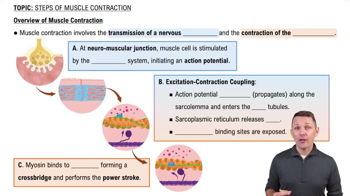
Muscle contraction is initiated when acetylcholine is released at the neuromuscular junction, binding to receptors on muscle fibers and triggering a series of events that lead to contraction. The influx of calcium ions into the muscle cells facilitates the interaction between actin and myosin filaments. Inhibition of acetylcholinesterase results in excessive acetylcholine, causing continuous stimulation and potentially leading to muscle fatigue or spasms.
Recommended video:
Guided course
4:53
Overview of Muscle Contraction

Autonomic Nervous System Effects

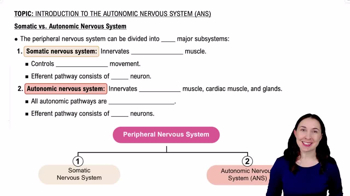
The autonomic nervous system (ANS) regulates involuntary bodily functions, including heart rate, digestion, and respiratory rate. Sarin's inhibition of acetylcholinesterase can lead to overstimulation of both the sympathetic and parasympathetic branches of the ANS, resulting in symptoms such as increased heart rate, excessive salivation, and respiratory distress. This dysregulation can cause severe physiological responses and potentially life-threatening conditions.
Recommended video:
1:50
Somatic vs. Autonomic Nervous System