
Ch. 10 Muscle Tissue and Physiology
Amerman- Human Anatomy & Physiology 3e
Amerman3rd EditionHuman Anatomy & PhysiologyISBN: 9780138247201, 9780138247928, 9780138201814Not the one you use?Change textbook
Chapter 10, Problem 20

Which of the following best describes single-unit smooth muscle tissue?
a. The fibers function individually.
b. It is found in organs that require precise control of contraction.
c. It contains gap junctions that couple the fibers electrically.
d. The amount of tension produced varies with the number of muscle cells recruited.

Verified step by step guidance
1
Understand the characteristics of single-unit smooth muscle tissue: Single-unit smooth muscle is a type of smooth muscle where the fibers contract as a single unit due to electrical coupling through gap junctions. This is different from multi-unit smooth muscle, where fibers function independently.
Recall the role of gap junctions: Gap junctions are specialized intercellular connections that allow ions and electrical signals to pass directly between adjacent cells. This electrical coupling enables synchronized contraction of the muscle fibers in single-unit smooth muscle.
Identify where single-unit smooth muscle is typically found: Single-unit smooth muscle is commonly found in the walls of hollow organs such as the intestines, stomach, and blood vessels, where coordinated contraction is necessary for functions like peristalsis or blood flow regulation.
Eliminate incorrect options: a) 'The fibers function individually' describes multi-unit smooth muscle, not single-unit smooth muscle. b) 'It is found in organs that require precise control of contraction' is more characteristic of multi-unit smooth muscle. d) 'The amount of tension produced varies with the number of muscle cells recruited' applies to skeletal muscle, not single-unit smooth muscle.
Select the correct answer: Based on the characteristics of single-unit smooth muscle, the correct description is c) 'It contains gap junctions that couple the fibers electrically.'

Verified video answer for a similar problem:

This video solution was recommended by our tutors as helpful for the problem above.
Was this helpful?

Key Concepts

Here are the essential concepts you must grasp in order to answer the question correctly.

Single-Unit Smooth Muscle Tissue

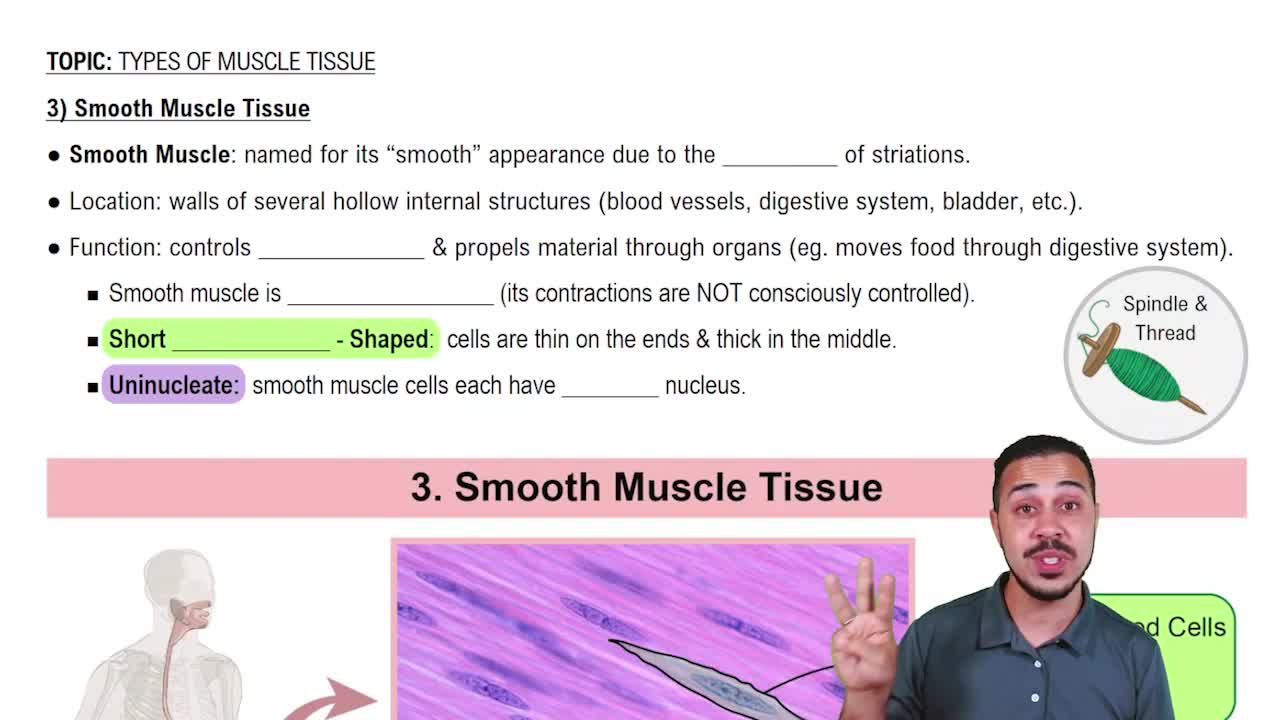
Single-unit smooth muscle tissue, also known as visceral smooth muscle, is characterized by its fibers functioning as a single unit due to the presence of gap junctions. These junctions allow for electrical coupling between adjacent muscle cells, enabling coordinated contractions across the tissue. This type of muscle is typically found in hollow organs, such as the intestines and blood vessels, where rhythmic and involuntary contractions are necessary.
Recommended video:
Guided course
06:27
Smooth Muscle Tissue

Gap Junctions

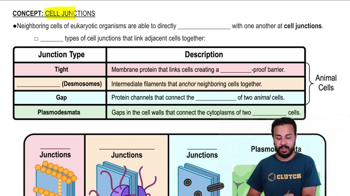
Gap junctions are specialized intercellular connections that facilitate communication between adjacent cells. In single-unit smooth muscle, these junctions allow ions and small molecules to pass directly from one cell to another, promoting synchronized contraction. This electrical coupling is crucial for the coordinated activity of smooth muscle, enabling it to function effectively as a unit rather than as isolated fibers.
Recommended video:
05:33
Cell Junctions

Coordinated Contraction

Coordinated contraction in single-unit smooth muscle refers to the simultaneous contraction of muscle fibers, which is essential for the proper functioning of various organs. This coordination is achieved through the electrical coupling provided by gap junctions, allowing the muscle to respond as a whole to stimuli. This is particularly important in organs that require rhythmic contractions, such as the digestive tract, to facilitate processes like peristalsis.
Recommended video:
Guided course
4:53
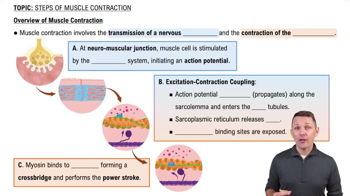
Overview of Muscle Contraction