Ch. 25 Fluid, Electrolyte, and Acid-Base Homeostasis
Amerman - Human Anatomy & Physiology 2nd Edition
Amerman2nd EditionHuman Anatomy & PhysiologyISBN: 9780136873822Not the one you use?Change textbook
Chapter 25, Problem 16a

Mark the following statements as true or false. If a statement is false, correct it to make a true statement.
a. Respiratory acidosis is caused by hypoventilation.

Verified step by step guidance
1
Understand the concept of respiratory acidosis: Respiratory acidosis occurs when the lungs cannot remove enough carbon dioxide (CO2) from the body, leading to an increase in blood CO2 levels and a decrease in blood pH (making it more acidic).
Analyze the term 'hypoventilation': Hypoventilation refers to inadequate ventilation, which results in reduced exhalation of CO2. This causes CO2 to accumulate in the blood, potentially leading to respiratory acidosis.
Evaluate the statement: The statement 'Respiratory acidosis is caused by hypoventilation' is true because hypoventilation directly leads to the retention of CO2, which is the primary cause of respiratory acidosis.
If the statement were false, the correction would involve identifying the actual cause of respiratory acidosis (e.g., hypoventilation) and replacing the incorrect cause with the correct one.
Conclude that the statement is true and does not require correction, as hypoventilation is indeed the cause of respiratory acidosis.

Verified video answer for a similar problem:

This video solution was recommended by our tutors as helpful for the problem above.
Was this helpful?

Key Concepts

Here are the essential concepts you must grasp in order to answer the question correctly.

Respiratory Acidosis

Respiratory acidosis is a condition characterized by an increase in carbon dioxide (CO2) levels in the blood due to inadequate ventilation. This leads to a decrease in blood pH, making it more acidic. It can occur in situations where the lungs cannot effectively remove CO2, such as in cases of hypoventilation, respiratory diseases, or certain neuromuscular disorders.
Recommended video:
Guided course
03:46
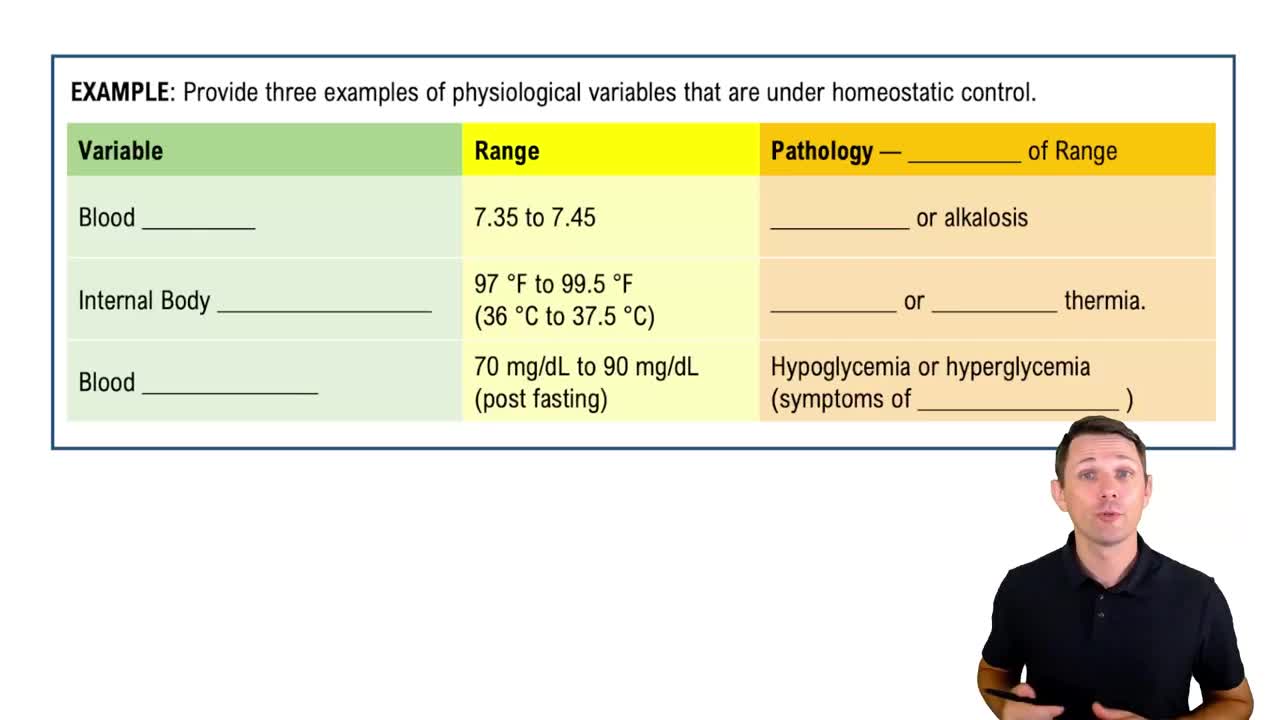
Homeostasis Example 1

Hypoventilation

Hypoventilation refers to a reduced rate or depth of breathing, resulting in decreased oxygen intake and inadequate removal of carbon dioxide. This can lead to respiratory acidosis as CO2 accumulates in the bloodstream. Causes of hypoventilation can include obesity, sedative use, or respiratory muscle weakness, impacting the body's ability to maintain normal gas exchange.

Acid-Base Balance

Acid-base balance is the regulation of the pH level in the body, which is crucial for normal physiological functions. The body maintains this balance through various mechanisms, including respiratory control of CO2 and renal regulation of bicarbonate. Disruptions in this balance, such as those caused by respiratory acidosis, can lead to significant health issues, emphasizing the importance of understanding these concepts in clinical settings.
Recommended video:
01:29
Acids and Bases
Related Practice
Textbook Question

Mark the following statements as true or false. If a statement is false, correct it to make a true statement.

c. Respiratory compensation for metabolic acidosis consists of hypoventilation.

2
views

Textbook Question

Mark the following statements as true or false. If a statement is false, correct it to make a true statement.

d. Renal compensation for metabolic alkalosis consists of reabsorption of hydrogen ions and secretion of bicarbonate ions.

4
views
Textbook Question

Explain what happens to the pH of a buffered solution when hydrogen ions are added. Why does this happen?

2
views
Textbook Question

Mark the following statements as true or false. If a statement is false, correct it to make a true statement.

b. Renal compensation for acid-base disturbances begins within minutes, whereas respiratory compensation begins within several hours.

3
views
Textbook Question

Which of the following mechanisms is/are used by the kidneys to regulate the pH of the blood? Circle all that apply.

a. Hydrogen ions are secreted from the proximal and distal tubules and the collecting system.

b. Hydrogen ions are reabsorbed from the nephron loop.

c. New bicarbonate ions are formed from glutamine and carbon dioxide in the interstitial fluid that enters proximal tubule cells.

d. Bicarbonate ions can be secreted.

e. Bicarbonate ions are reabsorbed directly from the filtrate.

5
views
Textbook Question

An increase in ventilation ________ the pH of the blood due to a/an ________ of carbon dioxide in the blood. A decrease in ventilation ________ the pH of the blood due to a/an ________ of carbon dioxide in the blood.

2
views