
Ch. 24 The Urinary System
Amerman - Human Anatomy & Physiology 2nd Edition
Amerman2nd EditionHuman Anatomy & PhysiologyISBN: 9780136873822Not the one you use?Change textbook
Chapter 24, Problem L3.A1c

Drugs that treat hypertension, or high blood pressure, have the following actions. Discuss the specific effect that each drug will have on the kidneys.
c. Blocking the Na+/Cl−/2K+ transport pumps in the thick ascending limb of the nephron loop

Verified step by step guidance
1
Understand the role of the Na+/Cl−/2K+ transport pumps in the thick ascending limb of the nephron loop. These pumps are responsible for reabsorbing sodium (Na+), chloride (Cl−), and potassium (K+) ions from the filtrate back into the bloodstream, which helps maintain the osmotic gradient necessary for water reabsorption in the kidney.
Recognize that blocking these transport pumps will inhibit the reabsorption of Na+, Cl−, and K+ ions. This will disrupt the osmotic gradient in the renal medulla, reducing the kidney's ability to reabsorb water from the filtrate.
Explain that the reduced water reabsorption will lead to an increase in urine output (diuresis). This is because water will remain in the filtrate instead of being reabsorbed into the bloodstream, which can help lower blood volume and, consequently, blood pressure.
Discuss how the increased excretion of Na+ and Cl− ions (natriuresis) will also contribute to a reduction in blood volume. Lower blood volume reduces the workload on the heart and decreases blood pressure.
Conclude that this mechanism makes these drugs effective in treating hypertension by reducing both blood volume and systemic vascular resistance, which are key factors in high blood pressure.

Verified video answer for a similar problem:

This video solution was recommended by our tutors as helpful for the problem above.
Was this helpful?

Key Concepts

Here are the essential concepts you must grasp in order to answer the question correctly.

Nephron Structure and Function

The nephron is the functional unit of the kidney, responsible for filtering blood and forming urine. It consists of various segments, including the glomerulus, proximal tubule, loop of Henle, distal tubule, and collecting duct. Each segment plays a specific role in reabsorbing water, electrolytes, and nutrients, as well as excreting waste products.
Recommended video:
0:50
The Nephron Example 1

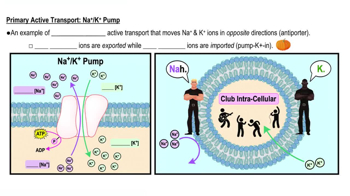
Na+/Cl−/2K+ Transport Pumps

The Na+/Cl−/2K+ transport pumps, located in the thick ascending limb of the loop of Henle, are crucial for reabsorbing sodium, chloride, and potassium ions from the filtrate back into the bloodstream. This process is essential for maintaining electrolyte balance and regulating blood pressure. Inhibition of these pumps can lead to increased excretion of these ions and diuresis.
Recommended video:
06:57
Primary Active Transport: Na+/K+ Pump

Effects of Diuretics on Blood Pressure

Diuretics are medications that promote the excretion of water and electrolytes through urine. By blocking the Na+/Cl−/2K+ transport pumps, diuretics reduce sodium reabsorption, leading to decreased blood volume and lower blood pressure. Understanding this mechanism is vital for comprehending how certain antihypertensive drugs function and their impact on kidney function.
Recommended video:
1:32
Effects of the Complement System
Related Practice
Textbook Question

Mr. Gupta has been diagnosed with nephrotic syndrome, which is characterized by the loss of plasma proteins such as albumin into the urine. What impact will this have on his colloid osmotic pressure? How will this affect the net filtration pressure in his capillary beds? What effect will this likely cause?

2
views
Textbook Question

Drugs that treat hypertension, or high blood pressure, have the following actions. Discuss the specific effect that each drug will have on the kidneys.

b. Blocking the receptor for angiotensin-II on blood vessels and in the renal tubule cells

Textbook Question

Why must the kidneys establish a concentration gradient in the interstitial fluid of the renal medulla in order to produce concentrated urine?

2
views
Textbook Question

What might it mean if you found a high concentration of urobilinogen in your patient's urine? (Hint: Consider the source of urobilinogen.)

5
views
Textbook Question

Mr. Wu is a patient with kidney disease who presents to your clinic for monitoring. You notice on his chart that his GFR was estimated through inulin administration to be about 35 ml/min. What does this tell you about the health of his kidneys? Mr. Wu is taking a medication that is normally excreted from the body in the urine. You order blood work and find that the concentration of this medication in his plasma is much higher than normal. How does his decreased GFR explain the elevated level of medication in his plasma?

7
views
Textbook Question

Drugs that treat hypertension, or high blood pressure, have the following actions. Discuss the specific effect that each drug will have on the kidneys.

a. Blocking the action of aldosterone on the kidneys

1
views