 Back
BackMetabolism and Energetics: Essentials of Anatomy & Physiology (Chapter 17) Study Notes
Study Guide - Smart Notes
 Tailored notes based on your materials, expanded with key definitions, examples, and context.
Metabolism and Energetics
Introduction to Metabolism and Energetics
Metabolism encompasses all chemical reactions occurring within the body, providing the energy necessary for maintaining homeostasis. Energetics is the study of how energy flows and transforms within biological systems. Cells require energy to synthesize new organic molecules, support growth, repair, secretion, and maintain nutrient reserves.
Metabolism: The sum of all chemical reactions in the body, divided into catabolism (breakdown of molecules for ATP synthesis) and anabolism (synthesis of new molecules).
Energetics: The study of energy flow and transformation in living organisms.
Nutrients: Essential substances required for ATP production and cellular functions.
Cellular Metabolism
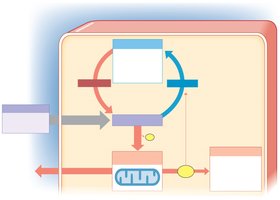
Cellular metabolism refers to the chemical reactions within cells that provide energy for homeostasis. It relies on a nutrient pool of amino acids, lipids, and simple sugars. Catabolic reactions break down these molecules, while anabolic reactions use them to build new cellular components.
Catabolism: Releases energy by breaking down organic molecules.
Anabolism: Uses energy to synthesize new organic molecules.
Nutrient Pool: The reservoir of organic molecules available for metabolic processes.
Reasons for Synthesis of New Components
Cells synthesize new components for structural maintenance, growth, secretion, and to build nutrient reserves. Metabolic turnover ensures ongoing replacement of cell structures, and excess nutrients are stored as glycogen or triglycerides.
Structural maintenance and repair
Support for growth and cell division
Production of secretions
Building nutrient reserves
Carbohydrate Metabolism
Overview of Carbohydrate Metabolism
Most cells use glucose to generate ATP through cellular respiration, which includes glycolysis, the citric acid cycle, and the electron transport chain. Glycolysis occurs in the cytosol and does not require oxygen, while the citric acid cycle and electron transport chain occur in mitochondria and require oxygen.
Cellular Respiration Equation:
Glycolysis: Anaerobic breakdown of glucose to pyruvate, yielding 2 ATP and 2 NADH per glucose.
Citric Acid Cycle: Aerobic process in mitochondria, removes hydrogen atoms and transfers them to coenzymes.
Electron Transport Chain (ETC): Produces most cellular ATP via chemiosmosis, using oxygen as the final electron acceptor.
Glycolysis
Glycolysis is the process of breaking down one glucose molecule into two pyruvate molecules, generating a net gain of 2 ATP and 2 NADH. It occurs in the cytosol and is essential for cells lacking mitochondria or under hypoxic conditions.
Requires glucose, cytoplasmic enzymes, ATP, ADP, and NAD.
Net gain: 2 ATP per glucose.
Produces 2 NADH, which can be used in the electron transport chain.
Citric Acid Cycle (Krebs Cycle)
The citric acid cycle, also known as the tricarboxylic acid (TCA) cycle, occurs in the mitochondrial matrix. Its primary role is to remove hydrogen atoms from organic molecules and transfer them to coenzymes (NAD and FAD), producing NADH and FADH2 for the electron transport chain.
Acetyl-CoA enters the cycle, combining with a 4-carbon molecule to form citric acid.
Produces CO2, NADH, FADH2, and a small amount of ATP (via GTP).
Electron Transport Chain (ETC)
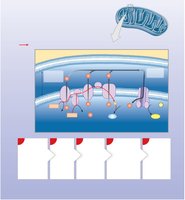
The ETC is embedded in the inner mitochondrial membrane and consists of four protein complexes, coenzyme Q, and cytochromes. Electrons from NADH and FADH2 are transferred through the chain, releasing energy to pump protons and generate ATP via ATP synthase. Oxygen is the final electron acceptor, forming water.
Energy Yield of Cellular Respiration
The complete aerobic breakdown of one glucose molecule yields 30–32 ATP:
Glycolysis: 2 ATP
Citric Acid Cycle: 2 ATP
Electron Transport Chain: 28 ATP
Gluconeogenesis and Glycogen Metabolism
Gluconeogenesis is the synthesis of new glucose from non-carbohydrate sources (e.g., lactate, glycerol, some amino acids). Glycogen is the storage form of glucose in liver and muscle cells, forming compact, insoluble granules.
Gluconeogenesis is essential because some glycolytic steps are irreversible.
Glycogen reserves are mobilized when glucose is needed.
Lipid Metabolism
Lipid Catabolism (Lipolysis)
Lipolysis is the breakdown of triglycerides into glycerol and fatty acids. Glycerol is converted to pyruvate, while fatty acids undergo beta-oxidation in mitochondria, generating NADH, FADH2, and acetyl-CoA for the citric acid cycle. One 18-carbon fatty acid can yield up to 120 ATP.
Beta-oxidation: Sequential removal of two-carbon fragments from fatty acids.
Ketone bodies are produced from excess acetyl-CoA during rapid fat catabolism.
Lipid Synthesis (Lipogenesis)
Lipogenesis is the synthesis of lipids from acetyl-CoA and other organic molecules. Essential fatty acids must be obtained from the diet, as the body cannot synthesize all required fatty acids.
Lipid Transport and Distribution
Lipids are transported in the blood as lipoproteins, which are complexes of lipids and proteins. Major types include chylomicrons, low-density lipoproteins (LDL), and high-density lipoproteins (HDL).
Chylomicrons: Transport dietary triglycerides from intestines to tissues.
LDL ("bad cholesterol"): Delivers cholesterol to tissues; excess can lead to arterial plaques.
HDL ("good cholesterol"): Returns cholesterol to the liver for excretion or recycling.
Protein Metabolism
Protein Catabolism
Proteins are broken down into amino acids, which can be used to synthesize new proteins or, if necessary, catabolized for energy. Catabolism involves removal of the amino group (transamination or deamination), producing ammonium ions that are converted to urea in the liver and excreted in urine.
Transamination: Transfer of an amino group to another molecule to form a new amino acid.
Deamination: Removal of the amino group, forming ammonium ion (NH4+).
Excessive protein catabolism can lead to ketosis and ketoacidosis.
Protein Synthesis and Imbalances
Nonessential amino acids can be synthesized by the body, while essential amino acids must be obtained from the diet. Protein deficiency or inherited metabolic disorders (e.g., phenylketonuria) can disrupt normal protein metabolism and cause disease.
Nucleic Acid Metabolism
Nucleic Acid Catabolism
DNA is not used as an energy source, but RNA can be broken down into nucleotides. Most nucleotides are recycled, but some are catabolized, producing nitrogenous wastes such as uric acid and urea. Elevated uric acid can cause gout.
Nutrition and Dietary Balance
Balanced Diet and Nutritional Requirements
A balanced diet provides all essential nutrients, including amino acids, fatty acids, vitamins, minerals, and water. Proper nutrition prevents malnutrition and supports homeostasis.
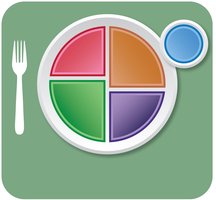
USDA's MyPlate guide recommends balanced proportions from grains, vegetables, fruits, dairy, and protein groups.
Additional info:
Metabolic rate and basal metabolic rate (BMR) are influenced by age, sex, activity, and hormonal status.
Homeostatic mechanisms regulate body temperature and energy balance.
Age-related changes affect dietary requirements and metabolism.
