Ch. 22 The Digestive System
Amerman - Human Anatomy & Physiology 2nd Edition
Amerman2nd EditionHuman Anatomy & PhysiologyISBN: 9780136873822Not the one you use?Change textbook
Chapter 22, Problem 8

Trace the pathway that food takes through the entire alimentary canal, from the oral cavity to the anal canal.

Verified step by step guidance
1
Start with the oral cavity (mouth), where food is ingested. Here, mechanical digestion occurs through chewing (mastication), and chemical digestion begins with the action of salivary amylase breaking down carbohydrates.
Food is then pushed by the tongue into the pharynx and enters the esophagus. The process of swallowing (deglutition) moves the food bolus down the esophagus via peristaltic contractions.
The food bolus passes through the lower esophageal sphincter into the stomach. In the stomach, mechanical digestion continues through churning, and chemical digestion occurs with the secretion of gastric juices, including hydrochloric acid and pepsin, which begin protein digestion.
The partially digested food, now called chyme, moves into the small intestine through the pyloric sphincter. In the small intestine (duodenum, jejunum, and ileum), most digestion and nutrient absorption occur. Enzymes from the pancreas and bile from the liver aid in breaking down fats, proteins, and carbohydrates.
Finally, undigested material passes into the large intestine (colon), where water and electrolytes are absorbed. The remaining waste is compacted into feces and stored in the rectum until it is expelled through the anal canal during defecation.

Verified video answer for a similar problem:

This video solution was recommended by our tutors as helpful for the problem above.
Was this helpful?

Key Concepts

Here are the essential concepts you must grasp in order to answer the question correctly.

Alimentary Canal

The alimentary canal, also known as the digestive tract, is a continuous tube that extends from the mouth to the anus. It includes several key structures such as the oral cavity, esophagus, stomach, small intestine, large intestine, and rectum. Understanding this pathway is essential for comprehending how food is processed and nutrients are absorbed throughout the digestive system.
Recommended video:
Guided course
3:34
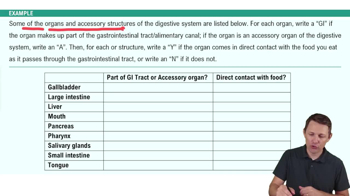
Introduction to the Digestive System Example 1

Digestive Processes

Digestive processes encompass the mechanical and chemical breakdown of food. Mechanical digestion begins in the mouth with chewing and continues in the stomach, while chemical digestion involves enzymes breaking down food into absorbable nutrients. These processes are crucial for transforming food into energy and building blocks for the body.
Recommended video:
Guided course
5:08
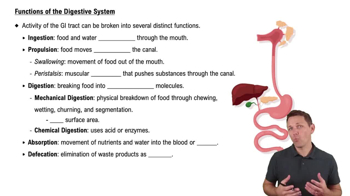
Functions of the Digestive System

Absorption and Elimination

Absorption refers to the process by which nutrients from digested food are taken up into the bloodstream, primarily occurring in the small intestine. Elimination is the final stage of digestion, where indigestible substances and waste products are expelled from the body through the anal canal. Understanding these processes is vital for grasping how the body utilizes food and maintains homeostasis.
Recommended video:
Guided course
02:48
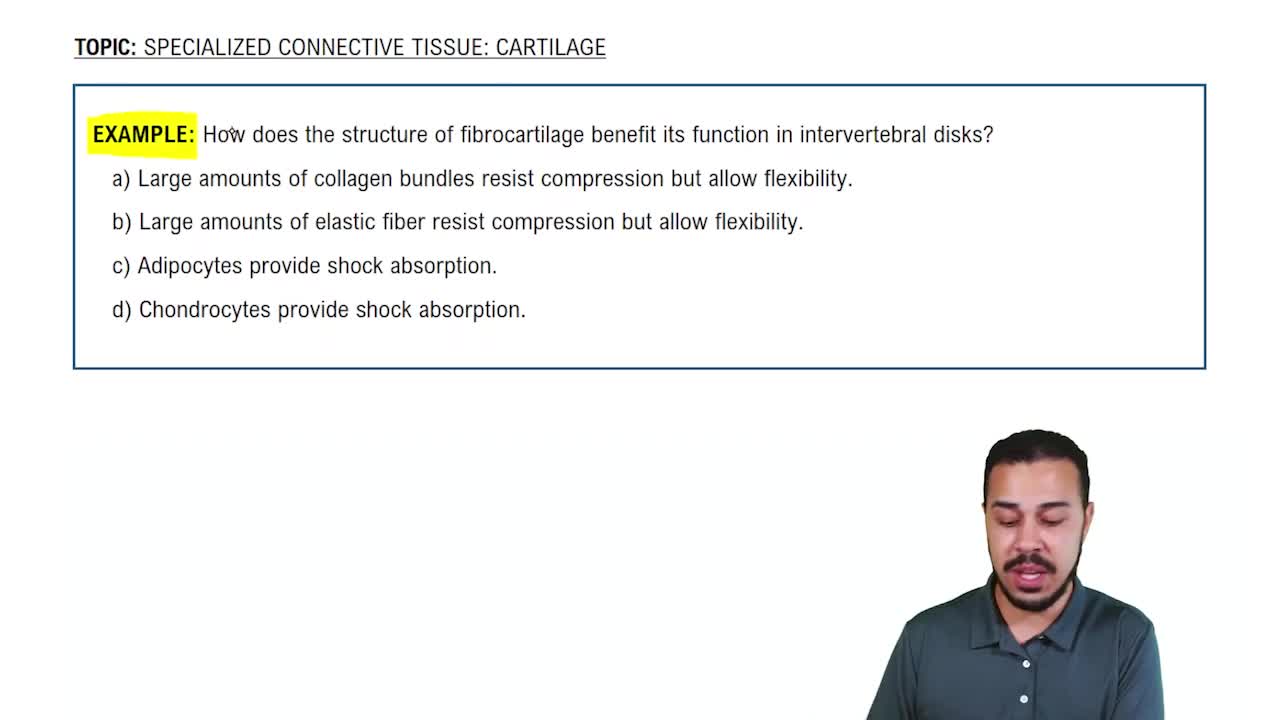
Specialized Connective Tissue: Cartilage Example 3
Related Practice
Textbook Question

Mark the following statements as true or false. If a statement is false, correct it to make a true statement.

The exocrine cells of the pancreas and salivary glands are islet cells.

3
views
Textbook Question

The common hepatic duct and main pancreatic duct enter into the:

a. Pyloric sphincter

b. Duodenum

c. Ileum

d. Cecum

5
views
Textbook Question

Match the following terms with the correct definition. 

__Chief cells          

__Parietal cells           

__Gastrin           

__Pyloric sphincter         

__Diffuse neuroendocrine (DNES) cells         

__Gastroesophageal sphincter         

__Pepsin         

__Chyme

a. Hormone that stimulates multiple digestive processes

b. Enzyme that begins protein digestion

c. Produce acid and intrinsic factor

d. Liquid produced as a result of stomach churning

e. Produce pepsinogen

f. Cells in gastric glands that produce hormones

g. Controls passage of bolus from esophagus to stomach

h. Controls passage of stomach contents to duodenum

2
views
Textbook Question

Which of the following best describes the microscopic structure of the liver?

a. Hexagonal plates of hepatocytes surrounding a central vein with portal triads at each corner

b. Octagonal plates of hepatocytes surrounding a central artery with portal triads at each corner

c. Irregular groups of hepatocytes surrounding a central vein with bile ducts at each corner

d. Hexagonal plates of hepatocytes surrounding a portal vein with bile ducts at each corner

4
views
Textbook Question

Which of the following statements about accessory organ secretions is not true?

a. Hepatocytes produce bile, which drains out of the liver via the common hepatic ducts.

b. Saliva contains secretory IgA and lysozyme, which play an important role in preventing the growth of pathogenic bacteria in the oral cavity.

c. Pancreatic juice contains digestive enzymes and bicarbonate ions to neutralize the acidic chyme.

d. The gallbladder produces bile, which drains out of the gallbladder via the cystic duct.

2
views
Textbook Question

What are the three folds of the small intestine called? What is their purpose?

2
views