
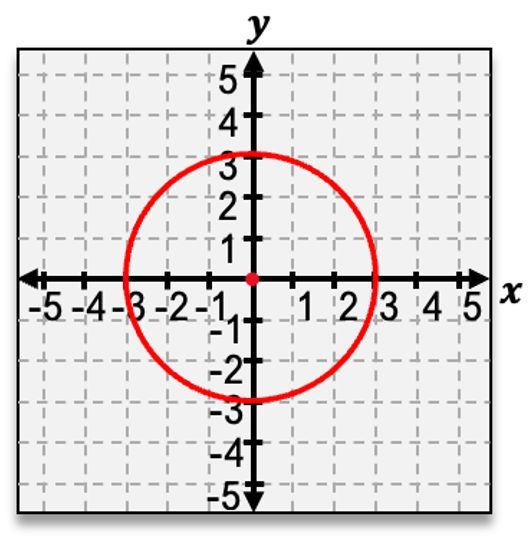
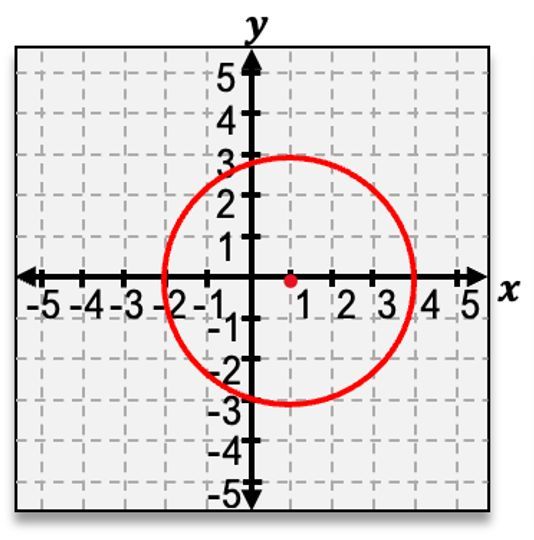
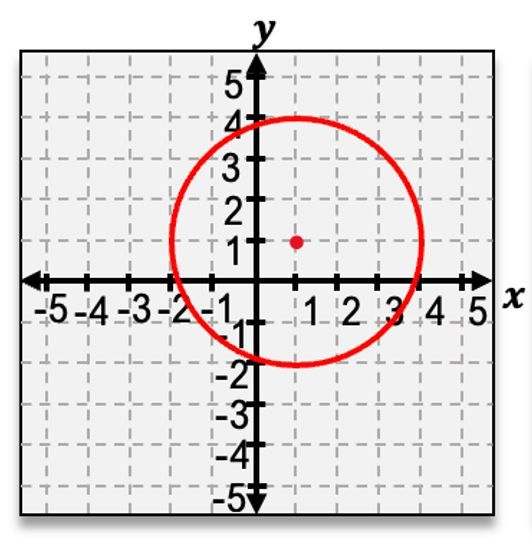
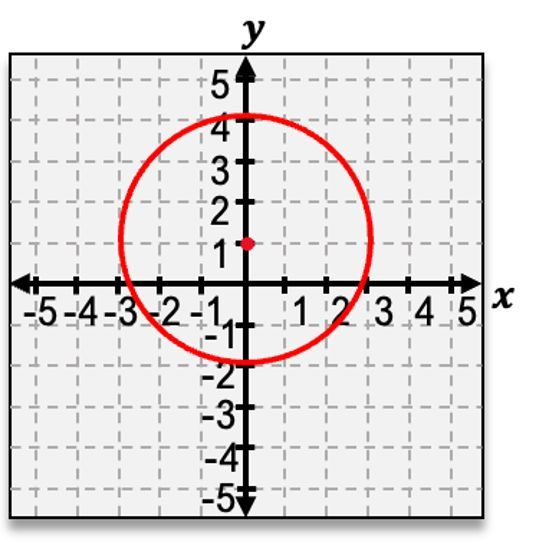
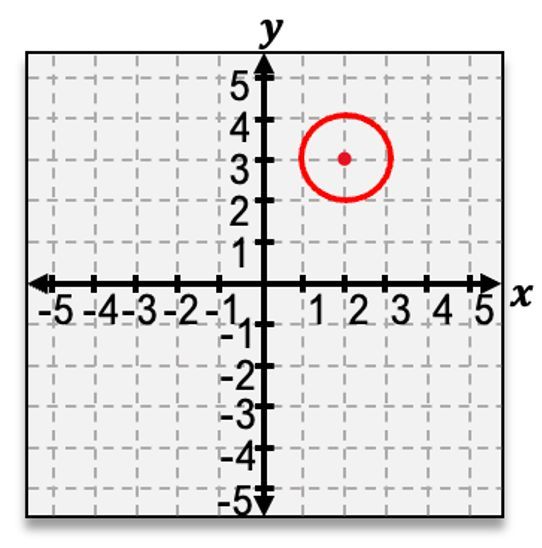
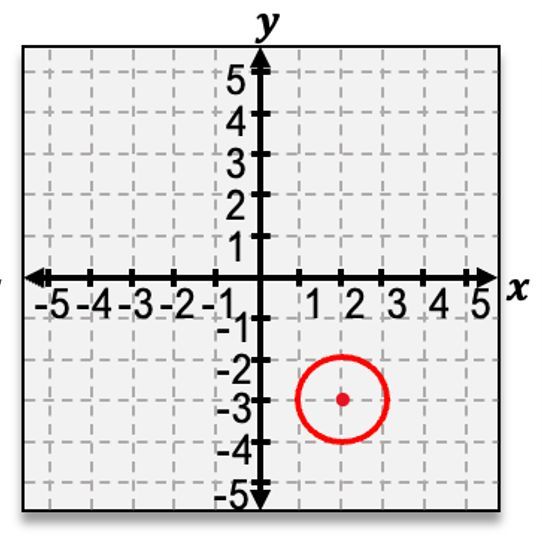
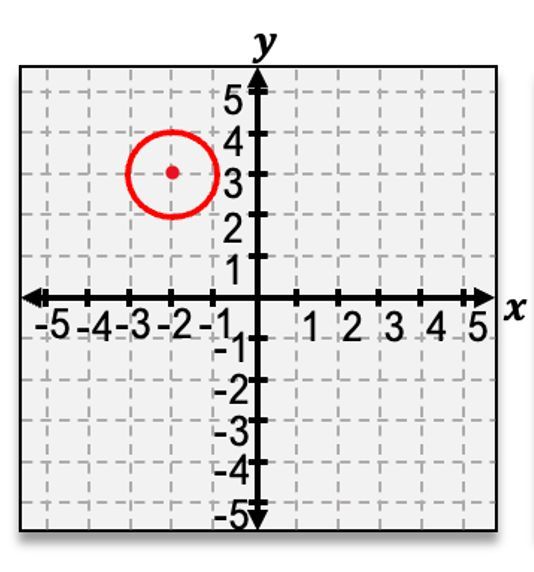
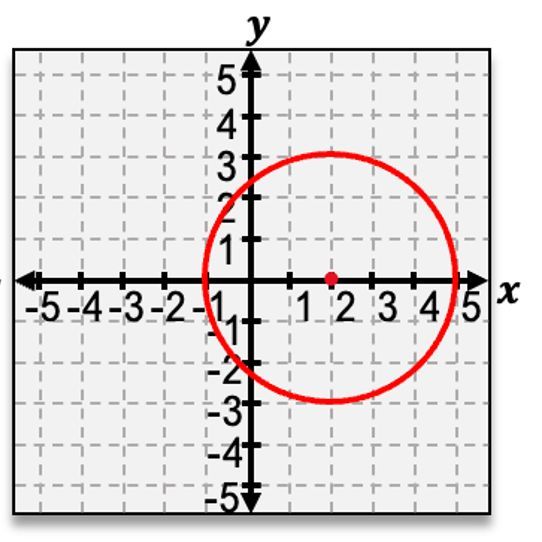
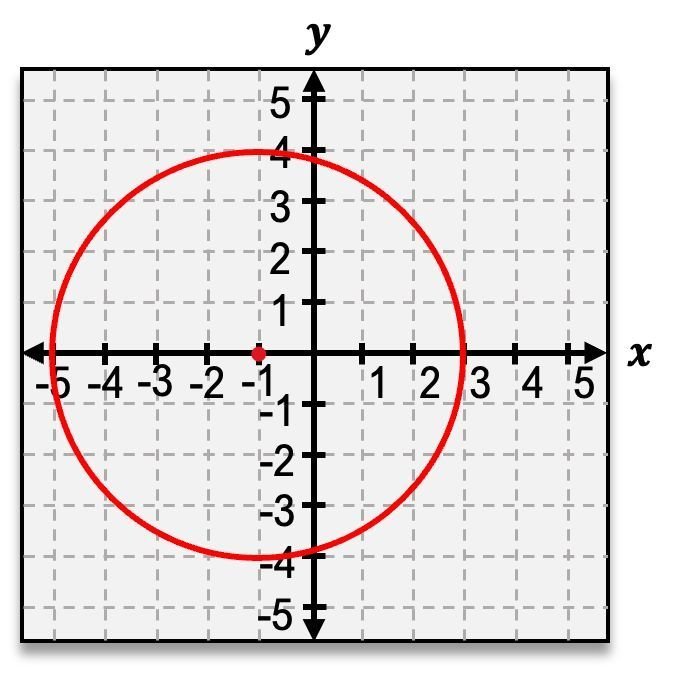
To write the equation of a circle, we utilize the standard form given by the equation:
\( (x - h)^2 + (y - k)^2 = r^2 \)
In this equation, \((h, k)\) represents the center of the circle, and \(r\) is the radius. Let's explore how to apply this formula through a few examples.
In the first scenario, the center of the circle is at \((0, 1)\) and the radius is \(3\). Substituting these values into the standard form, we have:
\( (x - 0)^2 + (y - 1)^2 = 3^2 \)
This simplifies to:
\( x^2 + (y - 1)^2 = 9 \)
Next, consider a circle with its center at \((1, -2)\) and a radius of \(1\). Plugging these values into the standard form gives us:
\( (x - 1)^2 + (y + 2)^2 = 1^2 \)
This results in the equation:
\( (x - 1)^2 + (y + 2)^2 = 1 \)
For the final example, the center is at \((-6, 3)\) and the radius is \(\sqrt{5}\). The equation becomes:
\( (x + 6)^2 + (y - 3)^2 = (\sqrt{5})^2 \)
Which simplifies to:
\( (x + 6)^2 + (y - 3)^2 = 5 \)
By understanding the relationship between the center, radius, and the standard form of the circle's equation, one can easily derive the equations and sketch the corresponding graphs. This method is essential for visualizing and solving problems related to circles in coordinate geometry.