Ch. 2 - Acute Angles and Right Triangles
Lial - Trigonometry 12th Edition
Lial12th EditionTrigonometryISBN: 9780136552161Not the one you use?Change textbook
Chapter 3, Problem 2.3.48

Use a calculator to evaluate each expression. 2 sin 25°13' cos 25°13' - sin 50°26'

Verified step by step guidance
1
First, recognize that the angles are given in degrees and minutes. Convert the angle 25°13' into decimal degrees if needed, or use the angle directly in your calculator by inputting degrees and minutes appropriately.
Recall the double-angle identity for sine: \(\sin(2\theta) = 2 \sin \theta \cos \theta\). Notice that the expression \(2 \sin 25°13' \cos 25°13'\) matches the left side of this identity with \(\theta = 25°13'\).
Rewrite the expression \(2 \sin 25°13' \cos 25°13'\) as \(\sin(2 \times 25°13')\), which simplifies to \(\sin 50°26'\).
Substitute this back into the original expression to get \(\sin 50°26' - \sin 50°26'\).
Since the two terms are the same, their difference is zero. This shows the expression simplifies to zero without needing further calculation.

Verified video answer for a similar problem:

This video solution was recommended by our tutors as helpful for the problem above.
Video duration:
2m
Was this helpful?

Key Concepts

Here are the essential concepts you must grasp in order to answer the question correctly.

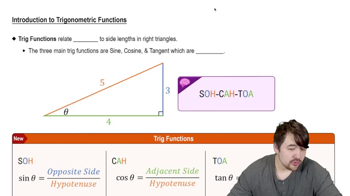
Trigonometric Functions and Their Values

Sine and cosine are fundamental trigonometric functions that relate angles to ratios of sides in a right triangle. Understanding how to evaluate these functions for given angles, including those expressed in degrees and minutes, is essential for solving the expression.
Recommended video:
6:04
Introduction to Trigonometric Functions

Angle Conversion and Notation

Angles given in degrees and minutes (e.g., 25°13') must be accurately interpreted or converted to decimal degrees for calculator input. One minute equals 1/60 of a degree, so converting ensures precise evaluation of trigonometric functions.
Recommended video:
06:01
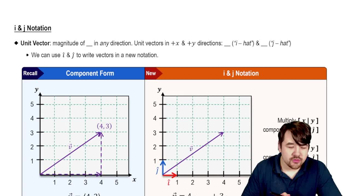
i & j Notation

Trigonometric Identities

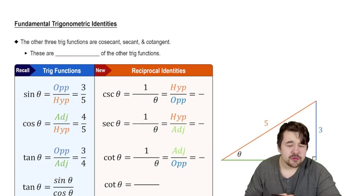
The expression involves terms like 2 sin A cos A and sin 2A, which are connected by the double-angle identity: sin 2A = 2 sin A cos A. Recognizing and applying this identity simplifies the expression and aids in verifying the result.
Recommended video:
5:32
Fundamental Trigonometric Identities