Ch. 12 - Analysis of Variance
Triola - Elementary Statistics 14th Edition
Triola14th EditionElementary StatisticsISBN: 9780137366446Not the one you use?Change textbook
Chapter 12, Problem 12.2.11b

Transformations of Data Example 1 illustrated the use of two-way ANOVA to analyze the sample data in Table 12-3. How are the results affected in each of the following cases?


b. Each sample value is multiplied by the same nonzero constant.

Verified step by step guidance
1
Understand the context of the problem: Two-way ANOVA (Analysis of Variance) is used to analyze the effects of two independent variables on a dependent variable. The question asks how multiplying each sample value by the same nonzero constant affects the results.
Recall the key property of ANOVA: The F-statistic in ANOVA is based on the ratio of variances (mean square between groups divided by mean square within groups). Variance is proportional to the square of the data values, so scaling the data by a constant affects the variances.
Analyze the effect of multiplying by a constant: If each sample value is multiplied by a constant \( c \), the variance of the data is scaled by \( c^2 \). This means both the numerator (between-group variance) and denominator (within-group variance) of the F-statistic are scaled by \( c^2 \).
Determine the impact on the F-statistic: Since both the numerator and denominator of the F-statistic are scaled by the same factor \( c^2 \), the ratio (F-statistic) remains unchanged. Therefore, the results of the two-way ANOVA, including the significance of the factors, are unaffected.
Conclude: Multiplying all sample values by the same nonzero constant does not change the conclusions of the two-way ANOVA because the F-statistic and p-values remain the same. This is due to the proportional scaling of variances in both the numerator and denominator.

Verified video answer for a similar problem:

This video solution was recommended by our tutors as helpful for the problem above.
Video duration:
6m
Was this helpful?

Key Concepts

Here are the essential concepts you must grasp in order to answer the question correctly.

Two-Way ANOVA

Two-Way ANOVA (Analysis of Variance) is a statistical method used to determine the effect of two independent categorical variables on a continuous dependent variable. It helps in understanding if there are any significant interactions between the two factors and how they influence the outcome. This technique is particularly useful when analyzing data with multiple groups and can provide insights into both main effects and interaction effects.
Recommended video:
Guided course
03:50
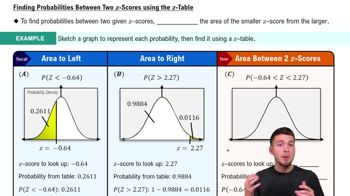
Probabilities Between Two Values

Data Transformation

Data transformation involves applying a mathematical operation to each data point in a dataset, which can include scaling, shifting, or applying a function. In the context of multiplying each sample value by a nonzero constant, this transformation affects the scale of the data but does not change the relationships or the variance among the groups. Understanding how transformations impact statistical analyses is crucial for interpreting results accurately.
Recommended video:
Guided course
04:39
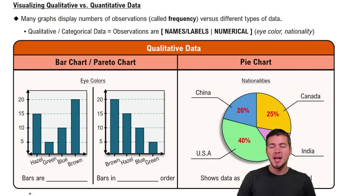
Visualizing Qualitative vs. Quantitative Data

Effect of Constant Multiplication

When each sample value in a dataset is multiplied by the same nonzero constant, the overall mean and variance of the data are also scaled by that constant. However, the relative differences between group means remain unchanged, which means that the results of a Two-Way ANOVA will not be affected in terms of significance. This concept is important for understanding how scaling transformations influence statistical tests and their interpretations.
Recommended video:
05:54
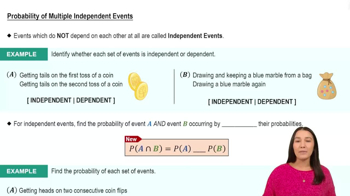
Probability of Multiple Independent Events
Related Practice
Textbook Question

Bonferroni Test Shown below are weights (kg) of poplar trees obtained from trees planted in a rich and moist region. The trees were given different treatments identified in the table below. The data are from a study conducted by researchers at Pennsylvania State University and were provided by Minitab, Inc. Also shown are partial results from using the Bonferroni test with the sample data.

c. Use the Bonferroni test procedure with a 0.05 significance level to test for a significant difference between the mean amount of the irrigation treatment group and the group treated with both fertilizer and irrigation. Identify the test statistic and either the P-value or critical values. What do the results indicate?

1
views
Textbook Question

Interaction


b. In general, when using two-way analysis of variance, if we find that there is an interaction effect, how does that affect the procedure?


Textbook Question

In Exercises 1–4, use the following listed measured amounts of chest compression (mm) from car crash tests (from Data Set 35 “Car Data” in Appendix B). Also shown are the SPSS results from analysis of variance. Assume that we plan to use a 0.05 significance level to test the claim that the different car sizes have the same mean amount of chest compression.


Anova


b. If the objective is to test the claim that the four car sizes have the same mean chest compression, why is the method referred to as analysis of variance?

Textbook Question

Bonferroni Test Shown below are weights (kg) of poplar trees obtained from trees planted in a rich and moist region. The trees were given different treatments identified in the table below. The data are from a study conducted by researchers at Pennsylvania State University and were provided by Minitab, Inc. Also shown are partial results from using the Bonferroni test with the sample data.

b. What do the displayed Bonferroni SPSS results tell us?

1
views
Textbook Question

c. Shown below is an interaction graph constructed from the data in Exercise 1. What does the graph suggest?

Textbook Question

Transformations of Data Example 1 illustrated the use of two-way ANOVA to analyze the sample data in Table 12-3. How are the results affected in each of the following cases?


c. The format of the table is transposed so that the row and column factors are interchanged.