What is the most common type of school in the United States?
Public schools are the most common, attended by about 82% of children in the U.S.
How are public schools funded and who can attend them?
Public schools are funded by the government and local property taxes, and are open to all students within a designated district.
What distinguishes magnet schools from other public schools?
Magnet schools are public schools offering specialized programs, such as engineering or fine arts, and often require applications or lotteries for admission.
What is a charter school and how does it operate?
Charter schools are public schools operating under a performance contract (charter), allowing them to try new programs or policies and demonstrate their effectiveness.
How are private schools funded and what percentage of U.S. children attend them?
Private schools are funded through tuition and private sources, and about 11% of U.S. children attend them.
What are religious private schools and what is their main feature?
Religious private schools are private schools with a religious affiliation, often aligning education with specific moral or religious values.
What are some benefits of attending private schools?
Private schools often have more resources, smaller class sizes, and greater flexibility and personalization for students.
What are potential downsides of private schools?
Private schools have less accountability, may not provide accessibility services, and can hand-select students, leading to less diversity.
On average, how do private school students perform academically compared to public school students?
Controlling for socioeconomic status, private school students generally outperform public school students academically, though there is variability.
What is the basic philosophy behind school choice programs?
School choice programs aim to create an educational marketplace by allowing families to choose schools, fostering competition and potentially raising standards.
How do school choice programs typically work?
They use public education funds to provide vouchers to families, which can be spent at public, magnet, charter, or private schools, including religious schools.
What are the main arguments in favor of school choice programs?
Supporters argue that school choice increases family freedom, helps students leave underperforming districts, and may improve schools through competition.
What are the main criticisms of school choice programs?
Critics note limited evidence of improved educational quality and warn that these programs may increase inequality, favoring families with more cultural capital.
Why is there debate about using taxpayer-supported vouchers at religious schools?
Some argue that taxpayer money should not fund religious education, raising concerns about the separation of church and state, despite Supreme Court rulings.
How many children and states currently participate in school choice programs in the U.S.?
About 1,000,000 children participate in school choice programs, which are present in approximately 28 states.
 Back
Back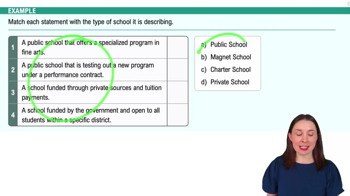
 01:10
01:10