Skip to main content
Sociology
My Course
Learn
AI Tutor
Study Guides
Flashcards
Explore
Try the app
My Course
Learn
AI Tutor
Study Guides
Flashcards
Explore
Try the app
Back
Health and Society definitions
You can tap to flip the card.
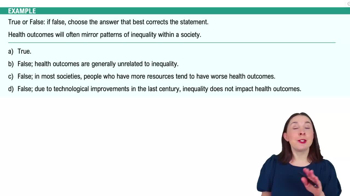
Health
You can tap to flip the card.
👆
Health
A state encompassing physical, mental, and social well-being, shaped by cultural, economic, and societal influences.
Track progress
Control buttons has been changed to "navigation" mode.
1/15
Related flashcards
Recommended videos
Health and Society quiz
Health and Society
15 Terms
Guided course
02:35
Health Across the Globe
2
views
Guided course
01:01
Health and Society Example 2
Guided course
00:38
Health and Society Example 1
1
views
Terms in this set (15)
Hide definitions
Health
A state encompassing physical, mental, and social well-being, shaped by cultural, economic, and societal influences.
Morbidity
The frequency or prevalence of disease or illness within a population, reflecting overall health challenges.
Mortality
The rate of death within a population, often used to assess the impact of diseases or health conditions.
Social Norms
Shared expectations and behaviors within a society that influence perceptions and practices related to well-being.
Inequality
Systematic differences in access to resources, opportunities, and health outcomes across social groups.
Socioeconomic Status
A measure combining income, education, and occupation, closely linked to variations in health outcomes.
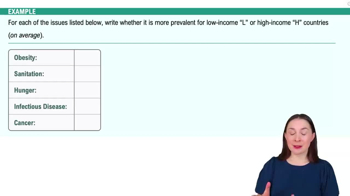
Sanitation
Access to clean water, safe plumbing, and hygienic living conditions, crucial for preventing disease.
Infectious Disease
Illnesses caused by pathogens, often prevalent in areas with poor sanitation and limited healthcare.
Infant Mortality
The rate at which children under one year of age die, serving as a key indicator of population health.
Life Expectancy
The average number of years a person is expected to live, influenced by social and economic factors.
Obesity
A condition marked by excessive body fat, associated with increased risk of chronic diseases.
Cancer
A group of diseases characterized by uncontrolled cell growth, more frequently diagnosed in longer-living populations.
Medical Costs
The financial expenses associated with healthcare services, often higher in wealthier nations.
Social Stratification
The hierarchical arrangement of individuals in society, impacting access to resources and health.
Technology
Tools and innovations that can improve or complicate well-being, such as medical advances or sedentary lifestyles.
 BackBack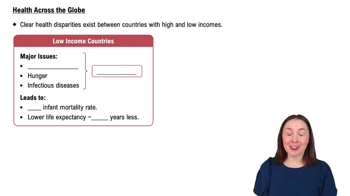
 02:35
02:35