
Textbook Question
A single force with x-component Fₓ acts on a 500 g object as it moves along the x-axis. The object's acceleration graph aₓ versus t) is shown in FIGURE P5.30. Draw a graph of Fₓ versus t.
2
views

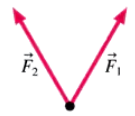
 Verified step by step guidance
 04:46
04:46
 10:13
10:13 07:30
07:30A single force with x-component Fₓ acts on a 500 g object as it moves along the x-axis. The object's acceleration graph aₓ versus t) is shown in FIGURE P5.30. Draw a graph of Fₓ versus t.
FIGURE EX5.14 shows an object's acceleration-versus-force graph. What is the object's mass?
Newton's First Law Exercises 17, 18, and 19 show two of the three forces acting on an object in equilibrium. Redraw the diagram, showing all three forces. Label the third force F3.
Exercises 23, 24, 25, 26, and 27 describe a situation. For each, identify all forces acting on the object and draw a free-body diagram of the object. An ice hockey puck glides across frictionless ice.
Exercises 23, 24, 25, 26, and 27 describe a situation. For each, identify all forces acting on the object and draw a free-body diagram of the object. Your physics textbook is sliding across the table.
What is the acceleration, as a multiple of g, if this force is applied to a 110 kg bicyclist? This is the combined mass of the cyclist and the bike.