 Back
BackVectors: Concepts, Operations, and Applications in Physics
Study Guide - Smart Notes
 Tailored notes based on your materials, expanded with key definitions, examples, and context.
Vectors
Scalars and Vectors: Definitions and Distinctions
In physics, quantities are classified as either scalars or vectors based on whether they possess direction in addition to magnitude. Understanding this distinction is fundamental for analyzing physical phenomena.
Scalar: A quantity described only by its magnitude (size or amount). Examples: temperature, distance, speed, mass.
Vector: A quantity described by both magnitude and direction. Examples: displacement, velocity, force, acceleration.
Key Points:
All measurements have magnitude; only vectors have direction.
Vectors are typically represented as arrows in diagrams, where the length indicates magnitude and the arrowhead indicates direction.
Examples:
"It’s 60°F outside" – Temperature (Scalar)
"I pushed with 100N north" – Force (Vector)
"I walked for 10 m" – Distance (Scalar)
"I walked 10 m east" – Displacement (Vector)
"I drove at 80 mph" – Speed (Scalar)
"I drove 80 mph west" – Velocity (Vector)
Vector Representation and Basic Operations
Vectors are drawn as arrows and can be added, subtracted, or multiplied using specific rules that account for their directionality.
Adding Scalars: Simple arithmetic addition.
Adding Vectors: Must consider both magnitude and direction. Vectors are added graphically by placing them tip-to-tail.
Resultant Vector: The single vector that has the same effect as the combination of two or more vectors. It is the shortest path from the start of the first vector to the end of the last.
Example: If you walk 3 m right and then 4 m up, your total displacement is the hypotenuse of a right triangle:
Total Displacement: m
Adding and Subtracting Vectors Graphically
Vectors are added by connecting them tip-to-tail. The order of addition does not affect the resultant (commutative property). Subtracting a vector is equivalent to adding its negative (same magnitude, opposite direction).
Adding Perpendicular Vectors: Use the Pythagorean theorem.
Adding Parallel Vectors: Add magnitudes if in the same direction; subtract if in opposite directions.
Subtracting Vectors: Reverse the direction of the vector being subtracted and add tip-to-tail.
Multiplying Vectors by Scalars
Multiplying a vector by a scalar changes its magnitude but not its direction. If the scalar is negative, the direction is reversed.
Multiplying by a number greater than 1 increases the magnitude.
Multiplying by a number between 0 and 1 decreases the magnitude.
Vector Components and Decomposition
Any vector in two or three dimensions can be broken down into components along the coordinate axes. This process is called decomposition. Conversely, components can be combined to form the original vector (composition).
Component Formulas:
Use SOH-CAH-TOA for right triangles.
Vector Addition by Components
To add vectors using components:
Resolve each vector into x and y components.
Add all x-components together and all y-components together.
Find the magnitude and direction of the resultant vector using the formulas above.
Vectors in All Quadrants
Vectors can point in any direction, so their components may be positive or negative depending on the quadrant. The reference angle is always measured from the nearest x-axis.
Magnitudes are always positive; components can be negative.
Signs of components depend on the direction (right/left, up/down).
Describing Vector Directions with Words
Directions can be described using compass points (e.g., "30° north of east") or as angles measured counterclockwise from the positive x-axis. Counterclockwise angles are positive; clockwise angles are negative.
Unit Vectors
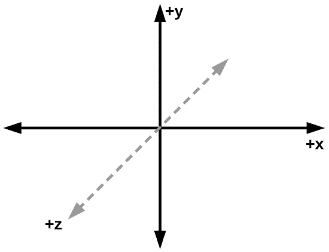
Unit vectors are vectors with a magnitude of 1, used to specify direction along coordinate axes. In three dimensions:
î points in the +x direction
ĵ points in the +y direction
k̂ points in the +z direction
Any vector can be written as a sum of its components multiplied by unit vectors:
Dot Product (Scalar Product)
The dot product of two vectors produces a scalar (number). It is defined as:
Alternatively, using components:
The dot product is maximal when vectors are parallel, zero when perpendicular, and negative when in opposite directions.
Cross Product (Vector Product) and the Right-Hand Rule
The cross product of two vectors produces a new vector perpendicular to both original vectors. The direction is determined by the right-hand rule:
Point your fingers along the first vector, curl toward the second; your thumb points in the direction of the cross product.
Magnitude:
The cross product is zero if the vectors are parallel or anti-parallel ( or ).
Cross Product Using Components
To compute the cross product using components:
For and :
This formula allows calculation of the cross product in any dimension.
Summary Table: Scalar vs. Vector Operations
Operation | Result | Formula |
|---|---|---|
Dot Product | Scalar | |
Cross Product | Vector | (direction by right-hand rule) |
Practice and Application
Calculate vector components, magnitudes, and directions for vectors in all quadrants.
Apply dot and cross product formulas to solve for work, torque, and other physical quantities.
Use unit vector notation for clarity in multi-dimensional problems.
