
The vibrational modes of molecular nitrogen are 'frozen out' at room temperature but become active at temperatures above ≈1500 K. The temperature in the combustion chamber of a jet engine can reach 2000 K, so an engineering analysis of combustion requires knowing the thermal properties of materials at these temperatures. What is the expected specific heat ratio γ for nitrogen at 2000 K?
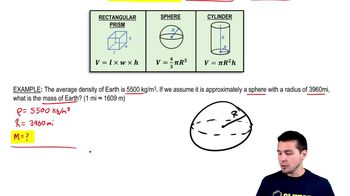
A 6.0 m ✕ 8.0 m ✕ 3.0 m room contains air at 20℃. What is the room's thermal energy?
Verified step by step guidance
Verified video answer for a similar problem:
Key Concepts
Thermal Energy
Specific Heat Capacity
Volume and Density
2.0 mol of monatomic gas A initially has 5000 J of thermal energy. It interacts with 3.0 mol of monatomic gas B, which initially has 8000 J of thermal energy. Which gas has the higher initial temperature?
The rms speed of the atoms in a 2.0 g sample of helium gas is 700 m/s. What is the thermal energy of the gas?
Liquid helium boils at 4.2 K. In a flask, the helium gas above the boiling liquid is at the same temperature. What are (a) the mean free path in the gas, (b) the rms speed of the atoms, and (c) the average energy per atom?
The thermal energy of 1.0 mol of a substance is increased by 1.0 J. What is the temperature change if the system is (a) a monatomic gas, (b) a diatomic gas, and (c) a solid?
1.0 mol of argon has 3100 J of thermal energy. What is the gas temperature in °C?
