 Back
BackCambridge IGCSE Physics 0625 Syllabus: Comprehensive Study Guide
Study Guide - Smart Notes
 Tailored notes based on your materials, expanded with key definitions, examples, and context.
Syllabus Overview: Cambridge IGCSE Physics 0625
Introduction
The Cambridge IGCSE Physics 0625 syllabus provides a comprehensive foundation in physics for students aged 14 to 16, covering essential concepts, experimental skills, and applications. The course is designed to develop scientific knowledge, problem-solving abilities, and practical skills, preparing students for further study and real-world applications.
Main Topics and Subtopics
1. Motion, Forces, and Energy
Physical Quantities and Measurement Techniques: Use of rulers, measuring cylinders, clocks, and digital timers; understanding scalar and vector quantities; resultant of vectors.
Motion: Definitions of speed and velocity; interpreting distance–time and speed–time graphs; calculating acceleration and understanding free fall.
Mass and Weight: Distinction between mass and weight; gravitational field strength; use of balances.
Density: Definition and calculation; determining density of solids and liquids; floating and sinking based on density.
Forces: Effects of forces on objects; load–extension graphs; friction and drag; turning effects and moments; center of gravity; equilibrium.
Momentum: Definition and calculation; impulse; conservation of momentum; resultant force and change in momentum.
Energy, Work, and Power: Types of energy stores; energy transfer; conservation of energy; kinetic and potential energy equations; work done; power; efficiency; energy resources and their advantages/disadvantages.
Pressure: Definition and calculation; pressure in fluids; variation with depth and density.
2. Thermal Physics
Kinetic Particle Model of Matter: States of matter; particle arrangement and motion; Brownian motion; pressure and temperature relationships; absolute zero.
Thermal Properties and Temperature: Thermal expansion; specific heat capacity; melting, boiling, evaporation, and condensation; cooling effects of evaporation.
Transfer of Thermal Energy: Conduction, convection, and radiation; experiments to demonstrate thermal properties; applications and consequences of heat transfer.
3. Waves
General Properties of Waves: Energy transfer without matter transfer; wave features (wavelength, frequency, amplitude, speed); transverse and longitudinal waves; reflection, refraction, and diffraction.
Light: Reflection and refraction; critical angle and total internal reflection; lenses and image formation; dispersion of light and the visible spectrum.
Electromagnetic Spectrum: Regions of the spectrum; uses and dangers of electromagnetic waves; communication technologies.
Sound: Production and transmission; speed of sound; frequency and pitch; echoes and ultrasound applications.
4. Electricity and Magnetism
Magnetism: Magnetic poles and fields; induced magnetism; permanent and temporary magnets; plotting field lines.
Electrical Quantities: Electric charge and current; potential difference and electromotive force; resistance and Ohm's law; electrical energy and power.
Electric Circuits: Circuit diagrams; series and parallel circuits; use of circuit components; electrical safety.
Electromagnetic Effects: Electromagnetic induction; a.c. generators; magnetic effect of current; d.c. motors; transformers and power transmission.
5. Nuclear Physics
Nuclear Model of the Atom: Atomic structure; isotopes; nuclear fission and fusion.
Radioactivity: Types of nuclear emission; radioactive decay; half-life; applications and safety precautions.
6. Space Physics
Earth and the Solar System: Earth's rotation and orbit; phases of the Moon; structure of the Solar System; gravitational fields and orbits.
Stars and the Universe: Life cycle of stars; galaxies; redshift and the expanding universe; Hubble constant and the age of the universe.
Assessment Overview
Multiple choice and theory papers for both Core and Extended candidates.
Practical assessment or alternative to practical paper, focusing on experimental skills.
Assessment objectives: Knowledge with understanding (50%), Handling information and problem-solving (30%), Experimental skills and investigations (20%).
Symbols, Units, and Mathematical Requirements
Familiarity with SI units and standard symbols for physical quantities (e.g., m for mass, s for time, V for voltage).
Ability to use prefixes (kilo-, milli-, micro-, etc.) and convert between units.
Competence in basic algebra, geometry, trigonometry, and data presentation (graphs, tables).
Experimental Skills and Safety
Selection and safe use of laboratory apparatus.
Planning and conducting experiments; recording and analyzing data; evaluating methods and suggesting improvements.
Understanding of key terms: accuracy, precision, repeatability, reproducibility, validity, anomaly, independent/dependent variables.
Command Words in Assessment
Key command words include: calculate, comment, compare, deduce, define, describe, determine, explain, give, identify, justify, predict, sketch, state, suggest.
Example: Electromagnetic Spectrum
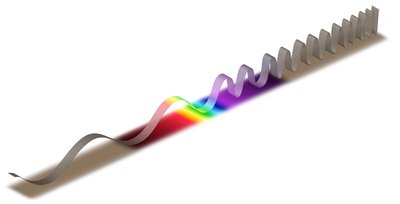
The electromagnetic spectrum consists of all types of electromagnetic waves, arranged by frequency and wavelength. It includes (in order of increasing frequency): radio waves, microwaves, infrared, visible light, ultraviolet, X-rays, and gamma rays. All electromagnetic waves travel at the same speed in a vacuum (approximately m/s).
Visible light is the portion of the spectrum detectable by the human eye, and can be dispersed into its component colors (red to violet).
Applications: Radio waves for communication, microwaves for cooking and satellite transmission, infrared for thermal imaging, ultraviolet for sterilization, X-rays for medical imaging, gamma rays for cancer treatment.
Hazards: Excessive exposure to certain types (e.g., ultraviolet, X-rays, gamma rays) can cause harm to living tissue.
Additional Info
This syllabus aligns closely with the core topics of a Physics with Algebra college course, covering foundational concepts, mathematical applications, and experimental skills.
For further details, consult the official Cambridge IGCSE Physics 0625 syllabus and recommended textbooks.
