
Textbook Question
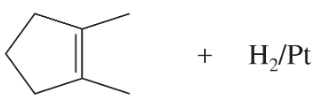
Give the expected major product for each reaction, including stereochemistry where applicable.
(a) but-1-ene + H2/Pt
(b) cis-but-2-ene + H2/Ni
1
views

 Verified step by step guidance
 00:48
00:48
 1:38
1:38 2:31
2:31Give the expected major product for each reaction, including stereochemistry where applicable.
(a) but-1-ene + H2/Pt
(b) cis-but-2-ene + H2/Ni
The chiral BINAP ligand shown in Figure 8-8 contains no asymmetric carbon atoms. Explain how this ligand is chiral.
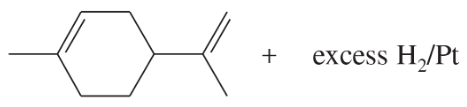
One of the principal components of lemongrass oil is limonene, C10H16. When limonene is treated with excess hydrogen and a platinum catalyst, the product is an alkane of formula C10H20. What can you conclude about the structure of limonene?
Show how you would accomplish the following synthetic conversions.
b. chlorocyclohexane → trans-2-chlorocyclohexanol
Problem-Solving Hint: The opening of a halonium ion is driven by its electrophilic nature. The weak nucleophile attacks the carbon bearing more positive charge.
Show how you would accomplish the following synthetic conversions.
c. 1-methylcyclopentanol → 2-chloro-1-methylcyclopentanol
Problem-Solving Hint: The opening of a halonium ion is driven by its electrophilic nature. The weak nucleophile attacks the carbon bearing more positive charge.
Predict the carbenoid addition products of the following reactions.
a. trans-hex-3-ene + CH2I2, Zn(Cu)
b. cis-hex-3-ene + CH2I2, Zn(Cu)