Ch. 21 - Carboxylic Acid Derivatives
Wade - Organic Chemistry 9th Edition
Wade9th EditionOrganic ChemistryISBN: 9780135213728Not the one you use?Change textbook
Chapter 21, Problem 47c

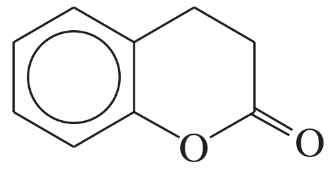
Predict the products of saponification of the following esters.
(c)

Verified step by step guidance
1
Step 1: Recognize that saponification is the base-catalyzed hydrolysis of an ester. The ester reacts with a strong base (e.g., NaOH) to produce a carboxylate salt and an alcohol.
Step 2: Identify the ester functional group in the given structure. The ester bond is between the oxygen atom and the carbonyl group (C=O). In this case, the ester is part of a benzyl acetate structure.
Step 3: Break the ester bond during saponification. The carbonyl carbon is attacked by the hydroxide ion (OH⁻), leading to the cleavage of the bond between the oxygen and the carbonyl carbon.
Step 4: Determine the products formed. The carbonyl group becomes a carboxylate ion (R-COO⁻), and the alcohol group (R-OH) is released. For this structure, the carboxylate salt will be derived from the acetic acid portion, and the alcohol will be benzyl alcohol.
Step 5: Write the general reaction for clarity: R-COOR' + OH⁻ → R-COO⁻ + R'-OH. Substitute the specific groups from the given structure to predict the products: benzyl alcohol (C₆H₅CH₂OH) and sodium acetate (CH₃COO⁻Na⁺).

Verified video answer for a similar problem:

This video solution was recommended by our tutors as helpful for the problem above.
Video duration:
2m
Was this helpful?

Key Concepts

Here are the essential concepts you must grasp in order to answer the question correctly.

Saponification

Saponification is a chemical reaction that involves the hydrolysis of an ester in the presence of a strong base, typically sodium hydroxide (NaOH) or potassium hydroxide (KOH). This reaction produces an alcohol and a carboxylate salt, which is commonly known as soap. Understanding this process is crucial for predicting the products of ester reactions.
Recommended video:

Esters

Esters are organic compounds formed from the reaction of an alcohol and a carboxylic acid, characterized by the functional group -COO-. They often have distinctive odors and are commonly found in fats and oils. Recognizing the structure of esters is essential for predicting the outcome of their reactions, including saponification.
Recommended video:
Guided course
02:39
Ester Nomenclature

Nucleophilic Acyl Substitution

Nucleophilic acyl substitution is a fundamental reaction mechanism in organic chemistry where a nucleophile attacks the carbonyl carbon of an acyl compound, such as an ester. In saponification, hydroxide ions act as the nucleophile, leading to the formation of a carboxylate ion and an alcohol. This mechanism is key to understanding how esters react under basic conditions.
Recommended video:
Guided course
01:47
Nucleophiles and Electrophiles can react in Substitution Reactions.