
Textbook Question
Drawpictorialrepresentations (as in Figures16-4 and 16-6) for the three bonding MOs and the two nonbonding MOs of cyclooctatetraene. The antibonding MOs are difficult to draw, except for the all-antibonding MO.
4
views

 Verified step by step guidance
 08:41
08:41
 02:58
02:58 08:30
08:30Drawpictorialrepresentations (as in Figures16-4 and 16-6) for the three bonding MOs and the two nonbonding MOs of cyclooctatetraene. The antibonding MOs are difficult to draw, except for the all-antibonding MO.
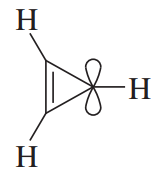
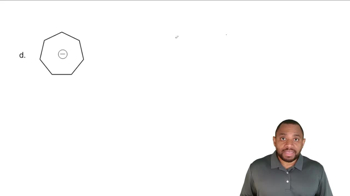
Explain why each compound or ion should be aromatic, antiaromatic, or nonaromatic.
(d)
(e)
(f) the [20]annulene dication
One of the following compounds is much more stable than the other two. Classify each as aromatic, antiaromatic, or nonaromatic.
a. Use the polygon rule to draw an energy diagram (as in Figures 16-5 and 16-7) for the MOs of a planar cyclooctatetraenyl system.
b. Fill in the eight pi electrons for cyclooctatetraene. Is this electronic configuration aromatic or antiaromatic? Could the cyclooctatetraene system be aromatic if it gained or lost electrons?
Repeat Problem 16-10 for the cyclopentadienyl ions. Draw one all-bonding MO, then a pair of degenerate MOs, and then a final pair of degenerate MOs. Draw the energy diagram, fill in the electrons, and confirm the electronic configurations of the cyclopentadienyl cation and anion.
Explain why each compound or ion should be aromatic, antiaromatic, or nonaromatic.
(a)
(b)
(c)