Textbook Question
Draw the important resonance contributors for the following cations, anions, and radicals.
(c)
1
views

 Wade 9th EditionCh. 15 - Conjugated Systems, Orbital Symmetry, and Ultraviolet SpectroscopyProblem 28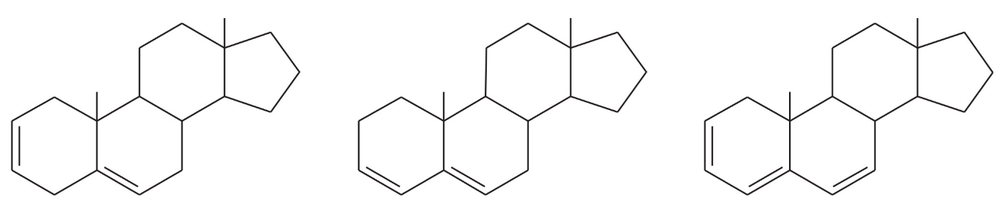
 Verified step by step guidance
 1:39
1:39
 02:02
02:02 2:56
2:56Draw the important resonance contributors for the following cations, anions, and radicals.
(c)
The diene lactone shown in part (a) has one electron-donating group (-OR) and one electron-withdrawing group (C=O). This diene lactone is sufficiently electron-rich to serve as the diene in a Diels–Alder reaction.
b. The Diels–Alder product A is not very stable. Upon mild heating, it reacts to produce CO2 gas and methyl benzoate (PhCOOCH3), a very stable product. Explain how this strongly exothermic decarboxylation takes place. (Hint: Under the right conditions, the Diels–Alder reaction can be reversible.)
Draw the important resonance contributors for the following cations, anions, and radicals.
(d)
Predict the products of the following proposed Diels–Alder reactions. Include stereochemistry where appropriate.
(a)
Draw the important resonance contributors for the following cations, anions, and radicals.
(e)
(f)
Predict the products of the following proposed Diels–Alder reactions. Include stereochemistry where appropriate.
(d)