
Textbook Question
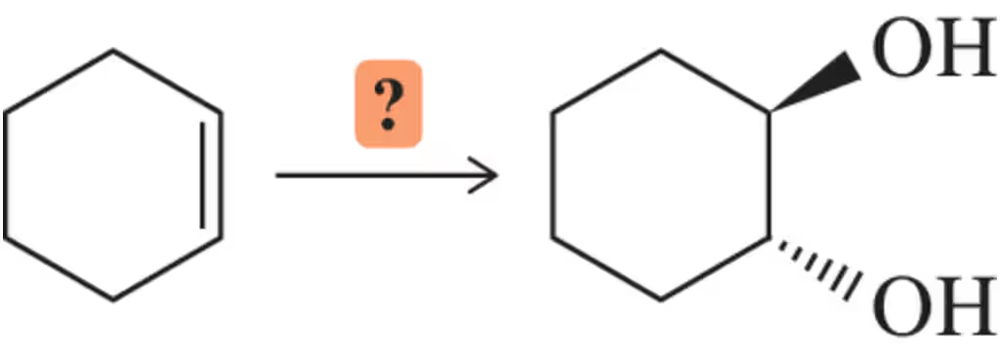
There are two mechanisms by which each of the two enantiomers can form in the reaction shown in Figure 9.37. Show them.
<IMAGE>
2
views

 Verified step by step guidance
 09:23
09:23
 00:27
00:27 01:52
01:52There are two mechanisms by which each of the two enantiomers can form in the reaction shown in Figure 9.37. Show them.
<IMAGE>
Which of molecules A–D would you expect to give a positive permanganate test? That is, which would result in a purple KMnO₄ solution turning brown?
(c)
Which of molecules A–D would you expect to give a positive permanganate test? That is, which would result in a purple KMnO₄ solution turning brown?
(d)
When using a terminal alkene under the conditions shown here, explain why it is unnecessary to show the relative stereochemical outcome in the product.
Show an arrow-pushing mechanism for reactions 1–4 in Figure 9.37.
<IMAGE>
Predict the product(s) of each of the following reactions, making sure to indicate the relative stereochemical outcome. Indicate any racemic mixtures by drawing both enantiomers.
(a)