Textbook Question
Keto–enol tautomerism is a reaction we discuss in detail in Chapter 19. Estimate the equilibrium constant of this reaction (BDE for C―C π bond = 65 kcal/mol ; for C―O π bond = 85 kcal/mol).
2
views

 Mullins 1st EditionCh. 5 - Chemical Reaction Analysis: Thermodynamics and KineticsProblem 63b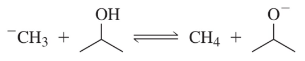
 Verified step by step guidance
 02:49
02:49
 02:19 02:19
Keto–enol tautomerism is a reaction we discuss in detail in Chapter 19. Estimate the equilibrium constant of this reaction (BDE for C―C π bond = 65 kcal/mol ; for C―O π bond = 85 kcal/mol).
Reaction (c), on the other hand, is favored (∆G° < 0). Identify the bonds formed and broken and explain this result in light of (a) and (b).
(c)
In light of your answers to parts (b) and (c), where both were shown to be quite favorable, imagine a scenario where either reaction is possible. Of the two, which would you expect to be faster? Which would you expect to be more favored? Explain each in the context of the important thermodynamic and/or kinetic parameters.
The hydrogenation of alkenes is a reaction we study in Chapter 9.
(b) Is this reaction favored or disfavored in terms of entropy?
Parts (a)–(d) of this assessment assist in the development of what will become a common theme in organic reactions and should be worked in order. [Think carefully about how each question relates to the others.]
(c) Without worrying about the mechanism of the reaction, estimate an equilibrium constant for the following carbonyl addition reaction based on the relative stability of the Lewis bases.
In Chapter 13, we discuss the ring-opening reactions of epoxides, such as the one shown here.
(a) Based on the bonds formed and the bonds broken, calculate ∆H°.