Textbook Question
Reaction (c), on the other hand, is favored (∆G° < 0). Identify the bonds formed and broken and explain this result in light of (a) and (b).
(c)
8
views

 Mullins 1st EditionCh. 5 - Chemical Reaction Analysis: Thermodynamics and KineticsProblem 56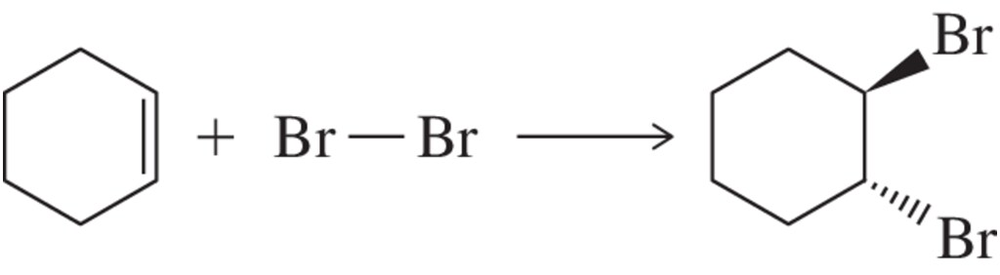
 Verified step by step guidance
 04:38
04:38
 04:09
04:09 02:46
02:46Reaction (c), on the other hand, is favored (∆G° < 0). Identify the bonds formed and broken and explain this result in light of (a) and (b).
(c)
Draw a reaction coordinate diagram, making sure to label reactants (R), products (P), intermediates (I), transition states (‡), activation energies ( Ea) , and ∆G°, for each of the following.
(c) a slightly endothermic, three-step reaction where the first step is rate-determining
Draw a reaction coordinate diagram, making sure to label reactants (R), products (P), intermediates (I), transition states (‡), activation energies ( Ea) , and ∆G°, for each of the following.
(b) an exothermic, two-step reaction where the second step is rate-determining
Draw a reaction coordinate diagram, making sure to label reactants (R), products (P), intermediates (I), transition states (‡), activation energies ( Ea) , and ∆G°, for each of the following.
(d) a slightly exothermic, three-step reaction where the third step is rate-determining.
(b) Mechanistically, the reaction occurs as shown below. Why is this reaction favored? Based on the stability of the anions, estimate Keq.
Reactions (a) and (b) are disfavored overall (∆G° > 0), yet they are favored based on ∆H°. Identify the bonds formed and broken for (a) and (b).
(b)