Ch. 3 - Alkanes and Cycloalkanes: Properties and Conformational Analysis
Mullins - Organic Chemistry: A Learner Centered Approach 1st Edition
Mullins1st EditionOrganic Chemistry: A Learner Centered ApproachISBN: 9780137566471Not the one you use?Change textbook
Chapter 2, Problem 17b

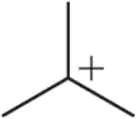
When we begin studying reactive intermediates, the designation of substitution will be especially important. Label the following carbocations as 1° , 2°, 3°, or 4° or based on the carbon bearing the positive charge.
(b) Skeletal structure of a carbocation with a positive charge on a carbon atom, indicating its classification.

Verified step by step guidance
1
Step 1: Understand the concept of carbocation substitution. The degree of substitution (1°, 2°, 3°, or 4°) refers to the number of carbon atoms directly attached to the carbon bearing the positive charge. A 1° carbocation has one carbon attached, a 2° carbocation has two carbons attached, and so on.
Step 2: Examine the structure of the carbocation provided in part (b). Identify the carbon atom that bears the positive charge.
Step 3: Count the number of carbon atoms directly bonded to the positively charged carbon. These are the substituents that determine the degree of substitution.
Step 4: Based on the count, assign the appropriate designation: 1° (primary), 2° (secondary), 3° (tertiary), or 4° (quaternary). For example, if the positively charged carbon is bonded to three other carbons, it is a 3° carbocation.
Step 5: Verify your answer by ensuring that you have correctly identified the substituents and their direct attachment to the positively charged carbon. Double-check the structure for accuracy.

Verified video answer for a similar problem:

This video solution was recommended by our tutors as helpful for the problem above.
Video duration:
1m
Was this helpful?

Key Concepts

Here are the essential concepts you must grasp in order to answer the question correctly.

Carbocation Stability

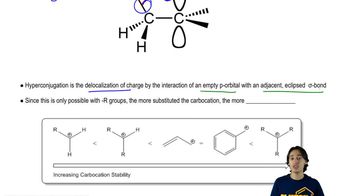
Carbocations are positively charged carbon species that are classified based on the number of alkyl groups attached to the carbon bearing the positive charge. The stability of carbocations increases with the degree of substitution: tertiary (3°) carbocations are more stable than secondary (2°), which are more stable than primary (1°). This stability is due to hyperconjugation and the inductive effect of alkyl groups, which help to disperse the positive charge.
Recommended video:
Guided course
05:58
Determining Carbocation Stability

Degree of Substitution

The degree of substitution refers to the number of carbon atoms directly attached to the carbon atom that carries the positive charge in a carbocation. A carbon atom can be classified as primary (1°) if it is attached to one other carbon, secondary (2°) if attached to two, tertiary (3°) if attached to three, and quaternary (4°) if attached to four. This classification is crucial for predicting the reactivity and stability of carbocations in organic reactions.
Recommended video:
Guided course
01:47
Nucleophiles and Electrophiles can react in Substitution Reactions.

Reactivity of Carbocations

Carbocations are highly reactive intermediates in organic chemistry, often formed during reactions such as electrophilic addition or rearrangements. Their reactivity is influenced by their stability; more stable carbocations are less likely to undergo rearrangement and more likely to participate in subsequent reactions. Understanding the reactivity patterns of different carbocation types is essential for predicting the outcomes of organic reactions.
Recommended video:
Guided course
07:21
Any Carbocation