Textbook Question
The reaction of alkoxides with haloalkanes is not a viable way to form ethers. (a) Why? (b) Why can thioethers be formed by an analogous reaction?
1
views

 Mullins 1st EditionCh. 13 - Alcohols, Ethers and Related Compounds: Substitution and EliminationProblem 106a(i,ii)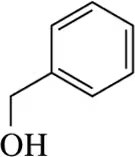
 Verified step by step guidance
 01:36
01:36
 01:17
01:17 01:34
01:34The reaction of alkoxides with haloalkanes is not a viable way to form ethers. (a) Why? (b) Why can thioethers be formed by an analogous reaction?
Predict the product(s) that would result when molecules (a)–(p) are allowed to react under the following conditions: (xi) HOCl, H₂O (xii) HIO₄. If no reaction occurs, write 'no reaction.'
(a)
Predict the product(s) that would result when molecules (a)–(p) are allowed to react under the following conditions: (ix) PCC; (x) H₂CrO₄ , H₂O. If no reaction occurs, write 'no reaction.'
(a)
Predict the product(s) that would result when molecules (a)–(p) are allowed to react under the following conditions: (iv) 1. TsCl, Et₃N 2. NaCN ; (v) 1. TsCl, Et₃N 2. NaOt-Bu . If no reaction occurs, write 'no reaction.'
(a)
Predict the product(s) that would result when molecules (a)–(p) are allowed to react under the following conditions: (vi) H₂SO₄. If no reaction occurs, write 'no reaction.'
(a)
Predict the product(s) that would result when molecules (a)–(p) are allowed to react under the following conditions: (iii) SOCl2 , NEt3. If no reaction occurs, write 'no reaction.'
(a)