Ch. 13 - Alcohols, Ethers and Related Compounds: Substitution and Elimination
Mullins - Organic Chemistry: A Learner Centered Approach 1st Edition
Mullins1st EditionOrganic Chemistry: A Learner Centered ApproachISBN: 9780137566471Not the one you use?Change textbook
Chapter 12, Problem 88a(vi)

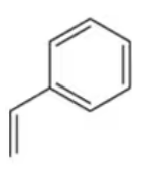
Predict the product(s) that would result when the following molecules are allowed to react under the following conditions: (vi) NaOH, H2O . If there is no reaction, write 'no reaction.'
(a) Chemical structure of styrene, featuring a benzene ring attached to a vinyl group.

Verified step by step guidance
1
Step 1: Analyze the given reaction conditions. Sodium hydroxide (NaOH) in water (H₂O) creates a strongly basic environment. This suggests that the reaction may involve deprotonation, nucleophilic substitution, or elimination, depending on the structure of the molecule.
Step 2: Examine the structure of the given molecule (a). Identify any functional groups present, such as alkyl halides, alcohols, esters, or carbonyl groups, as these will determine the reactivity under basic conditions.
Step 3: Determine the possible reaction mechanism. For example, if the molecule contains an alkyl halide, a nucleophilic substitution (SN2 or SN1) or elimination (E2 or E1) reaction may occur. If the molecule contains an ester or amide, hydrolysis may occur under basic conditions.
Step 4: Predict the product(s) based on the mechanism. For instance, if hydrolysis occurs, the ester may be converted into a carboxylate ion and an alcohol. If elimination occurs, a double bond may form in the molecule.
Step 5: Verify if the reaction is feasible under the given conditions. If the molecule lacks reactive functional groups or the reaction conditions are not suitable for the molecule, conclude that there is 'no reaction.'

Verified video answer for a similar problem:

This video solution was recommended by our tutors as helpful for the problem above.
Video duration:
57s
Was this helpful?

Key Concepts

Here are the essential concepts you must grasp in order to answer the question correctly.

Nucleophilic Substitution

Nucleophilic substitution is a fundamental reaction in organic chemistry where a nucleophile attacks an electrophile, replacing a leaving group. In the presence of a strong nucleophile like hydroxide ion (OH-), this reaction can lead to the formation of alcohols or other functional groups, depending on the substrate structure.
Recommended video:
Guided course
01:47
Nucleophiles and Electrophiles can react in Substitution Reactions.

Basicity of Hydroxide Ion

The hydroxide ion (OH-) is a strong base and a good nucleophile. Its basicity allows it to deprotonate acids, while its nucleophilic nature enables it to attack electrophilic centers in organic molecules. Understanding the reactivity of hydroxide is crucial for predicting the outcome of reactions involving alcohols and alkyl halides.
Recommended video:
3:39
Metal Ion Catalysis Concept 1

Reaction Conditions

The reaction conditions, such as the presence of NaOH and water, significantly influence the course of organic reactions. In aqueous conditions, reactions may favor substitution or elimination pathways depending on the substrate and the nature of the leaving group. Recognizing these conditions helps in predicting whether a reaction will occur and what products will form.
Recommended video:
1:18
EAS Reactions of Pyridine Example 1