Textbook Question
Predict the product(s) that would result when the following molecules are allowed to react under the following conditions: (vi) NaOH, H2O . If there is no reaction, write 'no reaction.'
(a)
2
views

 Mullins 1st EditionCh. 13 - Alcohols, Ethers and Related Compounds: Substitution and EliminationProblem 88a(i)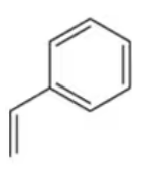
 Verified step by step guidance
 06:38
06:38
 05:09
05:09 03:08
03:08Predict the product(s) that would result when the following molecules are allowed to react under the following conditions: (vi) NaOH, H2O . If there is no reaction, write 'no reaction.'
(a)
Predict the product(s) that would result when the following molecules are allowed to react under the following conditions: (ii) 1. Hg(OAc)2 2. NaBH4.If there is no reaction, write 'no reaction.'
(a)
Predict the product(s) that would result when the following molecules are allowed to react under the following conditions: (v) H2O. If there is no reaction, write 'no reaction.'
(a)
Predict the product(s) that would result when the following molecules are allowed to react under the following conditions: (v) H2O; (vi) NaOH, H2O. If there is no reaction, write 'no reaction.'
(f)
Predict the product(s) that would result when the following molecules are allowed to react under the following conditions: (iv) 1. OsO4 2. NaHSO3. If there is no reaction, write 'no reaction.'
(a)
Predict the product(s) that would result when the following molecules are allowed to react under the following conditions: (i) 1. BH3 2. NaOH, H2O2 (ii) 1. Hg(OAc)2 2. NaBH4 (iii) H2SO4 , H2O (iv) 1. OsO4 2. NaHSO3 (v) H2O (vi) NaOH, H2O . If there is no reaction, write 'no reaction.'
(d)