Textbook Question
In the following allylic radicals, identify the carbon where the new C― Br bond is most likely to form in the second propagation step.
(c)
1
views

 Mullins 1st EditionCh. 11 - Properties and Synthesis of Alkyl Halides: Radical ReactionsProblem 32c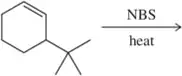
 Verified step by step guidance
 06:15
06:15
 03:28
03:28 03:43
03:43In the following allylic radicals, identify the carbon where the new C― Br bond is most likely to form in the second propagation step.
(c)
The fact that allylic halogenation results in formation of the most stable alkene suggests that it is under thermodynamic control. Thus, the second propagation step must be reversible. Suggest an arrow-pushing mechanism by which the less stable allylic halide might equilibrate to the more stable allylic halide.
In the following allylic radicals, identify the carbon where the new C― Br bond is most likely to form in the second propagation step.
(b)
(a) Using bond-dissociation energies (Table 5.6), which of the indicated bonds should break most easily?
(b) How does that help you explain the results shown in Figure 11.40?
Predict the products of the following allylic halogenation reactions.
(d)
Predict the products of the following allylic halogenation reactions.
(a)