Ch. 9 - Substitution and Elimination Reactions of Alkyl Halides
Bruice - Organic Chemistry 8th Edition
Bruice8th EditionOrganic ChemistryISBN: 9780135213711Not the one you use?Change textbook
Chapter 10, Problem 106a

Show how each of the following compounds can be synthesized from the given starting materials:
a. CH3CH2CH2Br→CH3CH2CH2CH2CH3

Verified step by step guidance
1
Step 1: Recognize the transformation required. The starting material is CH3CH2CH2Br (1-bromopropane), and the target compound is CH3CH2CH2CH2CH3 (pentane). This involves extending the carbon chain by one carbon atom.
Step 2: Identify the appropriate reaction type. To extend the carbon chain, a coupling reaction such as the Wurtz reaction can be used. The Wurtz reaction involves the reaction of alkyl halides with sodium metal in dry ether to form higher alkanes.
Step 3: Write the reaction mechanism. In the Wurtz reaction, two molecules of the alkyl halide react with sodium metal to form a new carbon-carbon bond. The general reaction is: RX2+Na2RR2+NaX, where R is the alkyl group and X is the halogen.
Step 4: Apply the reaction to the given compound. React two molecules of CH3CH2CH2Br with sodium metal in dry ether. The sodium atoms will remove the bromine atoms, allowing the two propyl groups (CH3CH2CH2-) to couple and form pentane (CH3CH2CH2CH2CH3).
Step 5: Verify the product. The reaction yields pentane, which matches the target compound. Ensure that the reaction conditions (dry ether and sodium metal) are suitable for the Wurtz reaction to proceed efficiently.

Verified video answer for a similar problem:

This video solution was recommended by our tutors as helpful for the problem above.
Video duration:
3m
Was this helpful?

Key Concepts

Here are the essential concepts you must grasp in order to answer the question correctly.

Nucleophilic Substitution

Nucleophilic substitution is a fundamental reaction in organic chemistry where a nucleophile replaces a leaving group in a molecule. In the context of synthesizing alkanes, this process can involve the substitution of a halogen (like Br) with a nucleophile, often leading to the formation of a new carbon-carbon bond.
Recommended video:
Guided course
01:47
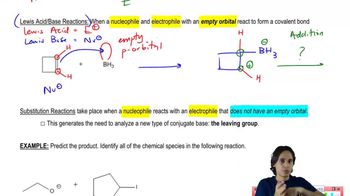
Nucleophiles and Electrophiles can react in Substitution Reactions.

Alkyl Halides

Alkyl halides are organic compounds containing a carbon atom bonded to a halogen atom (such as bromine). They serve as important intermediates in organic synthesis, as they can undergo various reactions, including nucleophilic substitutions and eliminations, to form more complex molecules or to extend carbon chains.
Recommended video:
Guided course
01:52
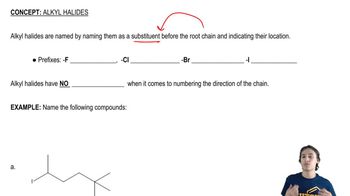
How to name alkyl halides

Carbon Chain Elongation

Carbon chain elongation refers to the process of increasing the length of a carbon chain in organic compounds. This can be achieved through reactions such as the Wurtz reaction, where two alkyl halides react in the presence of sodium metal to form a longer alkane, effectively allowing the synthesis of larger hydrocarbons from smaller precursors.
Recommended video:
Guided course
04:25
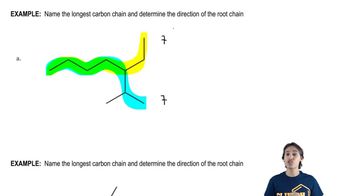
Name the longest carbon chain