Ch. 17 - Reactions at the Alpha-Carbon
Bruice - Organic Chemistry 8th Edition
Bruice8th EditionOrganic ChemistryISBN: 9780135213711Not the one you use?Change textbook
Chapter 18, Problem 53d

Draw the products of the following reactions:
d. diethyl 1,2-benzenedicarboxylate + sodium ethoxide: (1) slow addition of ethyl acetate; (2) HCl

Verified step by step guidance
1
Step 1: Recognize the reaction type. This is a Claisen condensation reaction, where diethyl 1,2-benzenedicarboxylate (an ester) reacts with ethyl acetate (another ester) in the presence of a strong base (sodium ethoxide). The reaction involves the formation of a β-keto ester intermediate.
Step 2: Deprotonation of the α-hydrogen. Sodium ethoxide (NaOEt) acts as a base and deprotonates the α-hydrogen of ethyl acetate, forming an enolate ion. The enolate ion is a nucleophile that will attack the electrophilic carbonyl carbon of the diethyl 1,2-benzenedicarboxylate.
Step 3: Nucleophilic attack. The enolate ion attacks one of the ester carbonyl carbons in diethyl 1,2-benzenedicarboxylate, leading to the formation of a tetrahedral intermediate. This intermediate then collapses, expelling an ethoxide ion (EtO⁻) as a leaving group and forming a β-keto ester.
Step 4: Acidic workup. After the slow addition of ethyl acetate and completion of the reaction, the mixture is treated with HCl. The acidic workup neutralizes the base and stabilizes the β-keto ester product.
Step 5: Draw the product. The final product is a β-keto ester where the ethyl acetate has been added to the diethyl 1,2-benzenedicarboxylate framework. Ensure to include the aromatic ring and the ester groups in the structure.

Verified video answer for a similar problem:

This video solution was recommended by our tutors as helpful for the problem above.
Video duration:
9m
Was this helpful?

Key Concepts

Here are the essential concepts you must grasp in order to answer the question correctly.

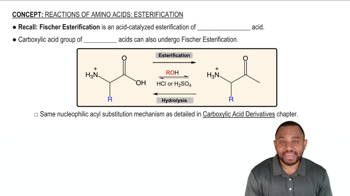
Esterification Reaction

Esterification is a chemical reaction that forms an ester from an alcohol and a carboxylic acid. In this context, diethyl 1,2-benzenedicarboxylate reacts with sodium ethoxide, which acts as a base, facilitating the nucleophilic attack of ethyl acetate on the carbonyl carbon of the ester. This reaction is crucial for understanding how the products are formed in the given reaction sequence.
Recommended video:
1:21
Reactions of Amino Acids: Esterification Concept 1

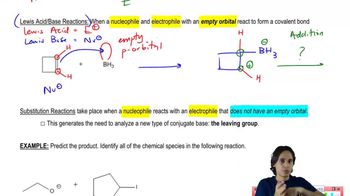
Nucleophilic Substitution

Nucleophilic substitution is a fundamental reaction mechanism in organic chemistry where a nucleophile replaces a leaving group in a molecule. In this case, the ethoxide ion acts as a nucleophile, attacking the electrophilic carbon of the diethyl 1,2-benzenedicarboxylate. Understanding this mechanism is essential for predicting the products of the reaction after the slow addition of ethyl acetate.
Recommended video:
Guided course
01:47
Nucleophiles and Electrophiles can react in Substitution Reactions.

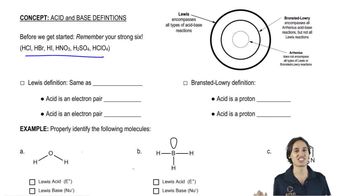
Acid-Base Reaction

An acid-base reaction involves the transfer of protons (H+) between reactants. After the nucleophilic substitution, the addition of HCl serves to protonate the alkoxide ion formed, converting it back to an alcohol. This step is important for completing the reaction and understanding the final products, as it influences the stability and reactivity of the intermediates.
Recommended video:
Guided course
02:49
The Lewis definition of acids and bases.