Ch. 16 - Reactions of Aldehydes and Ketones • More Reactions of Carboxylic Acid Derivatives
Bruice - Organic Chemistry 8th Edition
Bruice8th EditionOrganic ChemistryISBN: 9780135213711Not the one you use?Change textbook
Chapter 17, Problem 60c

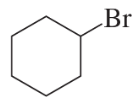
Using cyclohexanone as the starting material, describe how each of the following compounds can be synthesized:
c.

Verified step by step guidance
1
Step 1: Begin with cyclohexanone as your starting material. Cyclohexanone is a six-membered ring with a ketone functional group. The goal is to transform this structure into the desired compound.
Step 2: Identify the functional groups and structural changes needed to convert cyclohexanone into the target compound. This may involve adding or modifying functional groups such as alcohols, halides, or alkenes.
Step 3: Consider the reagents and conditions required for each transformation. For example, if you need to reduce the ketone to an alcohol, you might use a reducing agent like sodium borohydride (NaBH₄) or lithium aluminum hydride (LiAlH₄).
Step 4: Plan the sequence of reactions. Determine the order in which the transformations should occur to efficiently reach the target compound. This may involve protecting groups or intermediate steps to ensure selectivity and yield.
Step 5: Execute the synthesis by performing each reaction step-by-step, monitoring the progress with techniques such as TLC (Thin Layer Chromatography) or NMR (Nuclear Magnetic Resonance) to ensure the desired transformations are occurring.

Verified video answer for a similar problem:

This video solution was recommended by our tutors as helpful for the problem above.
Video duration:
5m
Was this helpful?

Key Concepts

Here are the essential concepts you must grasp in order to answer the question correctly.

Cyclohexanone Structure and Reactivity

Cyclohexanone is a six-membered cyclic ketone with a carbonyl group (C=O) that significantly influences its reactivity. The carbonyl carbon is electrophilic, making it susceptible to nucleophilic attack, which is a key feature in various organic reactions. Understanding its structure helps in predicting the types of reactions it can undergo, such as nucleophilic addition or oxidation.
Recommended video:
Guided course
01:17
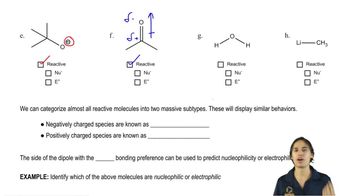
Reactivity of Molecules

Synthetic Pathways in Organic Chemistry

Synthetic pathways refer to the series of chemical reactions that transform a starting material into a desired product. In organic chemistry, these pathways often involve functional group transformations, rearrangements, and the use of reagents to achieve specific modifications. Familiarity with common synthetic strategies, such as reduction, oxidation, and substitution, is essential for designing a synthesis from cyclohexanone.
Recommended video:
2:13
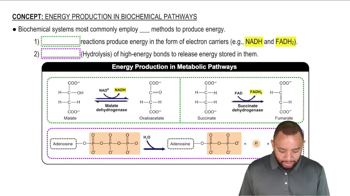
Energy Production In Biochemical Pathways Concept 1

Functional Group Interconversion

Functional group interconversion is a fundamental concept in organic synthesis that involves changing one functional group into another. This process is crucial when synthesizing complex molecules, as it allows chemists to modify the reactivity and properties of compounds. For example, converting a ketone like cyclohexanone into an alcohol or an alkene can open pathways to various target compounds.
Recommended video:
Guided course
02:36
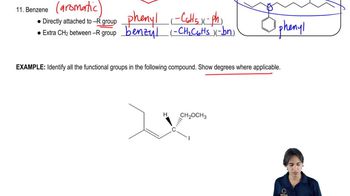
Identifying Functional Groups