Ch. 11 - Organometallic Compounds
Bruice - Organic Chemistry 8th Edition
Bruice8th EditionOrganic ChemistryISBN: 9780135213711Not the one you use?Change textbook
Chapter 12, Problem 23a

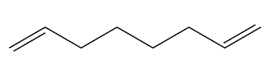
Draw the product of ring-closing metathesis for each of the following compounds:
a. Line drawing of a zigzag hydrocarbon chain, illustrating compounds for ring-closing metathesis practice.

Verified step by step guidance
1
Identify the functional groups in the given compound that can participate in the ring-closing metathesis (RCM) reaction. Typically, these are alkenes (C=C bonds) that are positioned in such a way that they can form a cyclic structure upon reaction.
Recall the mechanism of ring-closing metathesis. This reaction involves the use of a catalyst, such as a Grubbs catalyst, which facilitates the breaking and reforming of double bonds to create a cyclic product.
Determine the size of the ring that will form. The reaction is most favorable for 5- to 7-membered rings due to minimal ring strain. Analyze the positions of the alkenes in the starting compound to predict the ring size.
Redraw the structure of the compound, showing the newly formed cyclic product. Ensure that the double bond in the product is correctly placed, as the RCM reaction typically results in a single double bond within the ring.
Verify the stereochemistry and regiochemistry of the product, if applicable. Consider whether the reaction could lead to E/Z isomers and ensure the correct representation of the product.

Verified video answer for a similar problem:

This video solution was recommended by our tutors as helpful for the problem above.
Video duration:
3m
Was this helpful?

Key Concepts

Here are the essential concepts you must grasp in order to answer the question correctly.

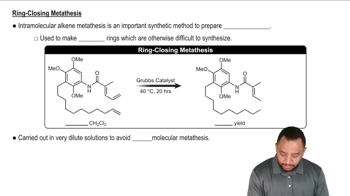
Ring-Closing Metathesis (RCM)

Ring-closing metathesis is a reaction in organic chemistry that involves the formation of a ring by the exchange of alkene partners through the use of a catalyst, typically a transition metal complex. This reaction is particularly useful for synthesizing cyclic compounds from linear precursors, allowing for the formation of various ring sizes and structures.
Recommended video:
1:47
Alkene Metathesis Concept 2

Alkene Reactivity

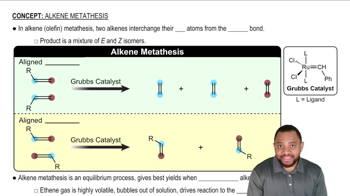
Alkenes are hydrocarbons that contain at least one carbon-carbon double bond, making them reactive intermediates in organic reactions. Their reactivity is influenced by factors such as sterics and electronics, which play a crucial role in determining the outcome of reactions like metathesis, where the double bonds are involved in forming new bonds.
Recommended video:
2:09
Alkene Metathesis Concept 1

Catalysts in Metathesis

Catalysts are substances that increase the rate of a chemical reaction without being consumed in the process. In ring-closing metathesis, catalysts such as Grubbs or Hoveyda catalysts facilitate the exchange of alkene partners, enabling the formation of cyclic structures efficiently. The choice of catalyst can significantly affect the selectivity and yield of the desired product.
Recommended video:
2:09
Alkene Metathesis Concept 1