Ch. 13 - Alcohols, Ethers and Related Compounds: Substitution and Elimination
Mullins - Organic Chemistry: A Learner Centered Approach 1st Edition
Mullins1st EditionOrganic Chemistry: A Learner Centered ApproachISBN: 9780137566471Not the one you use?Change textbook
Chapter 12, Problem 104b

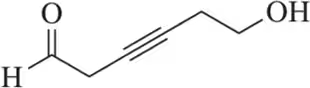
Suggest a synthesis for the following molecules beginning with organic molecules containing three or fewer carbons. [You will need to use a protecting group in these syntheses.]
(b) Chemical structure of 4-hydroxybut-2-ynal, featuring an aldehyde group and a terminal hydroxyl group.

Verified step by step guidance
1
Identify the target molecule and determine the functional groups present. Consider the carbon skeleton and any functional groups that need to be introduced or transformed.
Select a suitable starting material with three or fewer carbons that can be transformed into the target molecule. Consider the functional groups and carbon framework needed.
Plan the synthesis by identifying key transformations and reactions needed to construct the target molecule. Consider reactions such as oxidation, reduction, substitution, and addition.
Determine where a protecting group is necessary to prevent unwanted reactions at sensitive functional groups. Choose an appropriate protecting group and plan its introduction and removal.
Outline the synthesis steps, including the introduction of the protecting group, the key transformations, and the final deprotection step to yield the target molecule.

Verified video answer for a similar problem:

This video solution was recommended by our tutors as helpful for the problem above.
Video duration:
8m
Was this helpful?

Key Concepts

Here are the essential concepts you must grasp in order to answer the question correctly.

Synthesis Strategy

Synthesis strategy involves planning a sequence of chemical reactions to construct a target molecule from simpler starting materials. It requires understanding reaction mechanisms, functional group transformations, and the use of reagents. In this context, the strategy should focus on building the target molecule from organic molecules with three or fewer carbons, ensuring efficient and logical steps.
Recommended video:
1:16
Synthesis of Amino Acids: Strecker Synthesis Example 1

Protecting Groups

Protecting groups are chemical groups used to temporarily mask reactive sites in a molecule during a synthesis process. They prevent unwanted reactions at specific functional groups, allowing selective transformations elsewhere in the molecule. After the desired reactions are complete, the protecting group is removed to reveal the original functionality, crucial for complex syntheses.
Recommended video:
Guided course
02:44
Protecting Groups

Functional Group Interconversion

Functional group interconversion involves transforming one functional group into another to achieve the desired molecular structure. This concept is essential in organic synthesis, as it allows chemists to modify the chemical properties and reactivity of molecules. Understanding common interconversion reactions, such as oxidation, reduction, and substitution, is key to designing effective synthetic routes.
Recommended video:
Guided course
02:36
Identifying Functional Groups