Ch. 13 - Alcohols, Ethers and Related Compounds: Substitution and Elimination
Mullins - Organic Chemistry: A Learner Centered Approach 1st Edition
Mullins1st EditionOrganic Chemistry: A Learner Centered ApproachISBN: 9780137566471Not the one you use?Change textbook
Chapter 12, Problem 35b

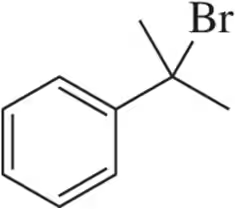
Provide the alcohol that would be used to make the bromoalkanes shown using PBr₃.
(b) Chemical structure of bromobenzene with a bromine atom attached to a benzene ring via a single bond.

Verified step by step guidance
1
Understand the reaction mechanism: The conversion of alcohols to bromoalkanes using phosphorus tribromide (PBr₃) is a substitution reaction where the hydroxyl group (-OH) of the alcohol is replaced by a bromine atom.
Identify the structure of the bromoalkane: Analyze the given bromoalkane structure to determine the carbon chain and the position of the bromine atom.
Determine the corresponding alcohol: To find the alcohol precursor, replace the bromine atom in the bromoalkane with a hydroxyl group (-OH) at the same position.
Consider stereochemistry: If the bromoalkane has chiral centers, ensure that the stereochemistry is considered, as PBr₃ can lead to inversion of configuration at the chiral center.
Verify the alcohol structure: Double-check the structure of the alcohol to ensure it matches the requirements for the reaction with PBr₃, such as primary or secondary alcohols being suitable for this conversion.

Verified video answer for a similar problem:

This video solution was recommended by our tutors as helpful for the problem above.
Video duration:
1m
Was this helpful?

Key Concepts

Here are the essential concepts you must grasp in order to answer the question correctly.

Alcohols

Alcohols are organic compounds characterized by the presence of a hydroxyl group (-OH) attached to a carbon atom. They serve as precursors in various chemical reactions, including the formation of bromoalkanes. Understanding the structure and reactivity of alcohols is crucial for predicting the outcome of reactions involving PBr₃.
Recommended video:
Guided course
01:01
How to name alcohols

Bromoalkanes

Bromoalkanes, or alkyl bromides, are organic compounds where a bromine atom is bonded to an alkyl group. They are typically synthesized from alcohols through substitution reactions using reagents like PBr₃. Recognizing the structure of bromoalkanes helps in identifying the corresponding alcohol needed for their synthesis.

PBr₃ Reaction Mechanism

Phosphorus tribromide (PBr₃) is used to convert alcohols into bromoalkanes via a substitution reaction. The mechanism involves the formation of an intermediate where the hydroxyl group is replaced by a bromine atom. Understanding this mechanism is essential for determining which alcohol will yield a specific bromoalkane.
Recommended video:
Guided course
02:16
Heck Reaction Mechanism