
Show the peptides that would result from cleavage by the indicated reagent:
a. Val-Arg-Gly-Met-Arg-Ala-Ser by carboxypeptidase A
b. Ser-Phe-Lys-Met-Pro-Ser-Ala-Asp by cyanogen bromide
c. Arg-Ser-Pro-Lys-Lys-Ser-Glu-Gly by trypsin
Verified step by step guidance
Show the peptides that would result from cleavage by the indicated reagent:
a. Val-Arg-Gly-Met-Arg-Ala-Ser by carboxypeptidase A
b. Ser-Phe-Lys-Met-Pro-Ser-Ala-Asp by cyanogen bromide
c. Arg-Ser-Pro-Lys-Lys-Ser-Glu-Gly by trypsin
Three peptides were obtained from a trypsin digestion of two different polypeptides. In each case, indicate the possible sequences from the given data and tell what further experiment should be carried out in order to determine the primary structure of the polypeptide.
a. polypeptide I:
1. Val-Gly-Asp-Lys
2. Leu-Glu-Pro-Ala-Arg
3. Ala-Leu-Gly-Asp
How would a protein that resides in the nonpolar interior of a membrane fold compared with the water-soluble protein just discussed?
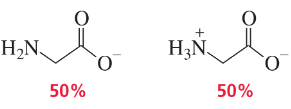
Which has a higher percentage of negative charge at physiological pH (7.4), leucine with pI = 5.98 or asparagine with pI = 5.43?
Indicate the peptides produced from cleavage by the indicated reagent:
a. His-Lys-Leu-Val-Glu-Pro-Arg-Ala-Gly-Ala by trypsin
b. Leu-Gly-Ser-Met-Phe-Pro-Tyr-Gly-Val by chymotrypsin
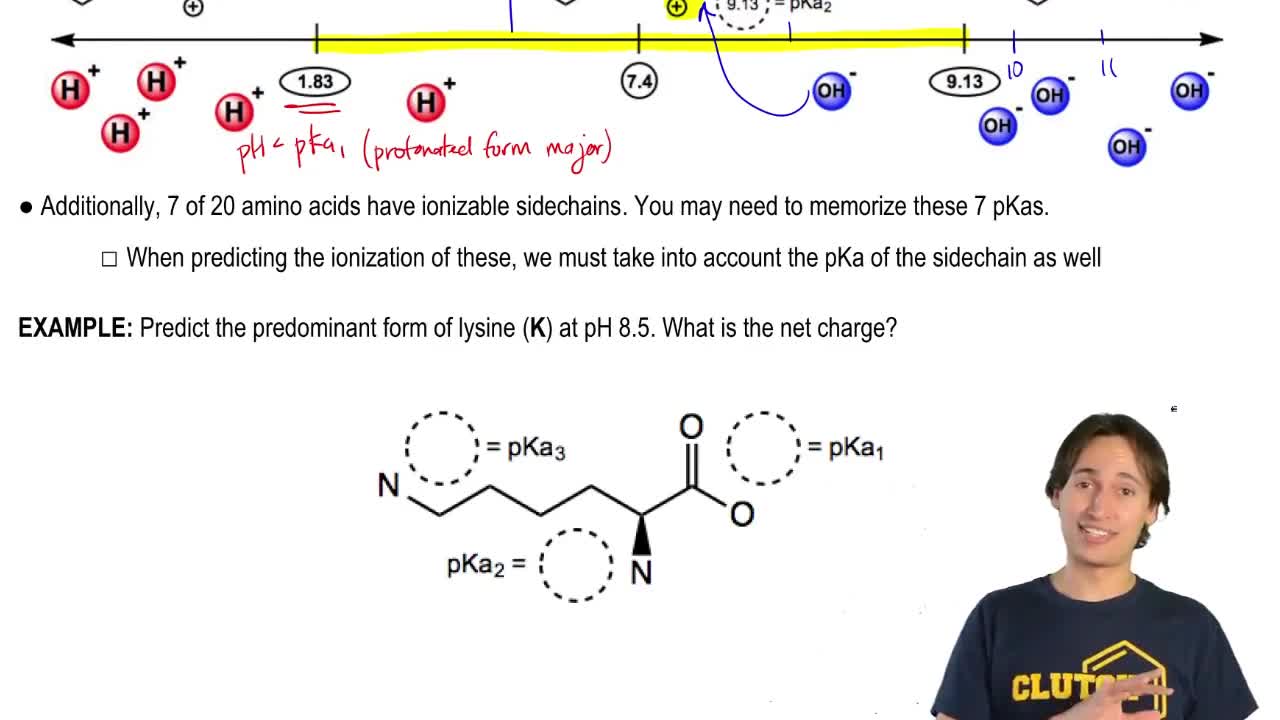
Draw the form of aspartate that predominates at the following pH values: c. pH=6.0