
Textbook Question
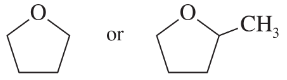
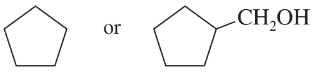
Predict which member of each pair is more soluble in water. Explain your prediction.
(e)
(f)
1
views

 Verified step by step guidance

 2:04
2:04
 00:48
00:48 02:36
02:36Predict which member of each pair is more soluble in water. Explain your prediction.
(e)
(f)
Which of the following pure compounds can form hydrogen bonds? Which can form hydrogen bonds with water? Which ones do you expect to be soluble in water?
a. (CH3CH2)2NH
b. (CH3CH2)3N
c. CH3CH2CH2OH
d. (CH3CH2CH2)2OH
Diethyl ether and butan-1-ol are isomers, and they have similar solubilities in water. Their boiling points are very different, however. Explain why these two compounds have similar solubility properties but dramatically different boiling points.
Which of the following pure compounds can form hydrogen bonds? Which can form hydrogen bonds with water? Which ones do you expect to be soluble in water?
e. CH3(CH2)3CH3
f. CH2=CH—CH2CH3
g. CH3COCH3
h. CH3CH2COOH
Predict which member of each pair is more soluble in water. Explain your prediction.
(a)
(b)
N-Methylpyrrolidine has a boiling point of 81 °C, and piperidine has a boiling point of 106 °C.
b. Tetrahydropyran has a boiling point of 88 °C, and cyclopentanol has a boiling point of 141 °C. These two isomers have a boiling point difference of 53 °C. Explain why the two oxygen-containing isomers have a much larger boiling point difference than the two amine isomers.