Skip to main content
Nutrition
My Course
Learn
Exam Prep
AI Tutor
Study Guides
Flashcards
Try the app
My Course
Learn
Exam Prep
AI Tutor
Study Guides
Flashcards
Try the app
Back
Nutrition For School-Age Children (Ages 6-11) quiz
You can tap to flip the card.
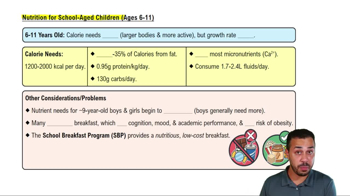
What is the typical daily calorie requirement for school-age children (6-11 years)?
You can tap to flip the card.
👆
What is the typical daily calorie requirement for school-age children (6-11 years)?
School-age children typically require 1,200 to 2,000 kilocalories per day, depending on factors like body size and activity level.
Track progress
Control buttons has been changed to "navigation" mode.
1/15
Related flashcards
Related practice
Recommended videos
Nutrition For School-Age Children (Ages 6-11) definitions
Nutrition For School-Age Children (Ages 6-11)
15 Terms
Nutrition For School-Age Children (Ages 6-11)
15. Nutrition: Toddlers to Late Adulthood
10 problems
Topic
Nutrition During Adolescence (Ages 12-19)
15. Nutrition: Toddlers to Late Adulthood
10 problems
Topic
15. Nutrition: Toddlers to Late Adulthood
4 topics
15 problems
Chapter
Guided course
01:27
Tackling Childhood Obesity
Guided course
02:54
Nutrition for School-Age Children (Ages 6-11)
Guided course
01:52
Nutrition for School-Age Children (Ages 6-11) Example 1
Terms in this set (15)
Hide definitions
What is the typical daily calorie requirement for school-age children (6-11 years)?
School-age children typically require 1,200 to 2,000 kilocalories per day, depending on factors like body size and activity level.
What percentage of daily calories should come from fat for children aged 6-11?
Between 25-35% of daily calories should come from fat for children in this age group.
How much protein per kilogram of body weight is recommended for school-age children?
School-age children need about 0.95 grams of protein per kilogram of body weight per day.
What is the recommended daily carbohydrate intake for children over one year old, including those aged 6-11?
The recommended daily carbohydrate intake is 130 grams per day for everyone above the age of one.
Why is calcium intake especially important for children aged 6-11?
Calcium intake is crucial to prevent deficiencies, which become a greater concern during this age group.
How much fluid should school-age children consume daily?
Children aged 6-11 are recommended to consume between 1.7 and 2.4 liters of fluids per day.
At what age do nutrient needs begin to differ between boys and girls?
Nutrient needs for boys and girls begin to differ around age nine, with boys generally needing more nutrients.
What are the effects of skipping breakfast in school-age children?
Skipping breakfast can decrease cognition, mood, and academic performance, and increase the risk of obesity.
How do school nutrition programs in the USA help promote healthy eating?
School nutrition programs follow federal guidelines that limit added sugars, sodium, unhealthy fats, and calories, ensuring balanced diets.
What types of foods are typically not served in schools due to nutrition guidelines?
Unhealthy foods and snacks like candies, sodas, and chocolates are not served in schools.
What is the purpose of the School Breakfast Program (SBP)?
The SBP provides nutritious, low-cost, or free breakfasts to many students at schools.
What are two major factors contributing to increased childhood obesity since the 1970s?
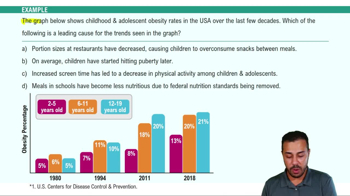
Larger portion sizes and increased screen time leading to less physical activity are major contributors.
How can parents help prevent childhood obesity in their children?
Parents can set a good example by eating healthy, offering healthy alternatives, limiting screen time, and encouraging physical activity.
Why is making healthy food fun important for children?
Making healthy food fun increases children's enjoyment and likelihood of choosing nutritious options.
What is energy balance, and why is it important for school-age children?
Energy balance is the relationship between calories consumed and expended; maintaining it supports healthy development and prevents obesity.
 BackBack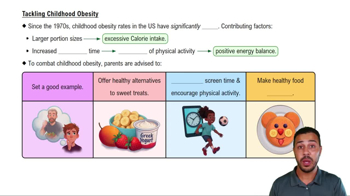
 01:27
01:27