Skip to main content
Nutrition
My Course
Learn
Exam Prep
AI Tutor
Study Guides
Flashcards
Try the app
My Course
Learn
Exam Prep
AI Tutor
Study Guides
Flashcards
Try the app
Back
Nutrition For School-Age Children (Ages 6-11) definitions
You can tap to flip the card.
Kilocalorie
You can tap to flip the card.
👆
Kilocalorie
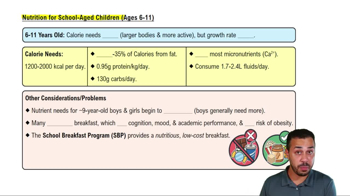
Unit measuring energy provided by food, with daily needs increasing for ages 6-11 due to growth and activity.
Track progress
Control buttons has been changed to "navigation" mode.
1/15
Related flashcards
Related practice
Recommended videos
Nutrition For School-Age Children (Ages 6-11) quiz
Nutrition For School-Age Children (Ages 6-11)
15 Terms
Nutrition For School-Age Children (Ages 6-11)
15. Nutrition: Toddlers to Late Adulthood
10 problems
Topic
Nutrition During Adolescence (Ages 12-19)
15. Nutrition: Toddlers to Late Adulthood
10 problems
Topic
15. Nutrition: Toddlers to Late Adulthood
4 topics
15 problems
Chapter
Guided course
01:27
Tackling Childhood Obesity
Guided course
02:54
Nutrition for School-Age Children (Ages 6-11)
Guided course
01:52
Nutrition for School-Age Children (Ages 6-11) Example 1
Terms in this set (15)
Hide definitions
Kilocalorie
Unit measuring energy provided by food, with daily needs increasing for ages 6-11 due to growth and activity.
Macronutrient
Nutritional component such as fat, protein, or carbohydrate required in large amounts for growth and energy.
Micronutrient
Essential vitamin or mineral needed in small quantities, with calcium being especially important in this age group.
Calcium
Mineral vital for bone development, with increased intake recommended to prevent deficiencies in school-age children.
Portion Size
Amount of food served or consumed at one time, with increases linked to higher calorie intake and obesity risk.
Energy Balance
Relationship between calories consumed and expended, influencing weight maintenance or gain in children.
Childhood Obesity
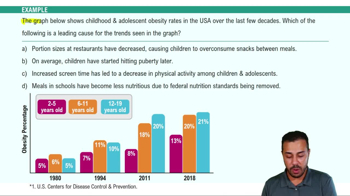
Condition marked by excessive body fat, associated with larger portions, sedentary behavior, and health risks.
Physical Activity
Movement or exercise that increases energy expenditure, crucial for healthy growth and obesity prevention.
School Nutrition Program
Federally regulated initiative ensuring meals meet standards for sugar, sodium, fat, and calorie content.
Breakfast
First meal of the day, whose omission can impair cognition, mood, and increase obesity risk in children.
Screen Time
Duration spent using electronic devices, with excessive amounts linked to reduced physical activity and weight gain.
Parental Role Modeling
Behavioral influence where children adopt healthy eating habits by observing their caregivers’ food choices.
Federal Nutrition Guidelines
Government standards regulating nutrient content in school meals to promote balanced diets and health.
Fluid Intake
Volume of liquids consumed daily, with increased recommendations for ages 6-11 to support growth and activity.
Nutrient Deficiency
State resulting from insufficient intake of essential nutrients, potentially impacting development in children.
 BackBack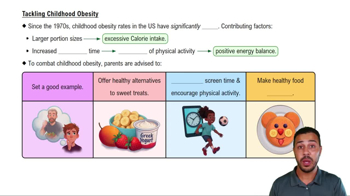
 01:27
01:27