The BRAT diet includes Bananas, Rice, Applesauce, and Toast.
Which type of vegetarian diet eliminates poultry and meats from the diet?
A vegetarian diet that eliminates poultry and meats is called a lacto-vegetarian or lacto-ovo-vegetarian diet, as these exclude all animal flesh but may include dairy and/or eggs.
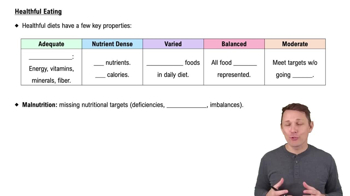
What are the key characteristics of a nutritionally balanced diet?
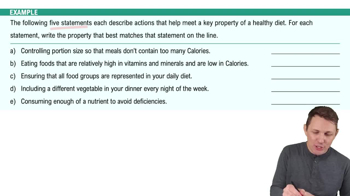
A nutritionally balanced diet is adequate (provides enough essential nutrients), nutrient dense (high in nutrients relative to calories), varied (includes different foods), balanced (represents all food groups), and moderate (meets nutritional targets without excess).
What does the term 'adequacy' mean in the context of a healthful diet?
Adequacy means getting enough essential nutrients, calories, vitamins, minerals, and fiber to meet your body's needs. It ensures you are not deficient in any required nutrient.
How is nutrient density generally calculated for a specific nutrient in a food?
Nutrient density is calculated by dividing the amount of a specific nutrient by the number of calories in the food. This gives a ratio that reflects how much of the nutrient you get per calorie.
What are some examples of foods that are considered nutrient dense?
Nutrient dense foods include vegetables, fruits, whole grains, beans or legumes, and fish. These foods are high in vitamins, minerals, healthy oils, and fiber relative to their calorie content.
What characterizes foods that are low in nutrient density?
Foods low in nutrient density are typically high in fat, saturated fat, and added sugars but low in vitamins, minerals, healthy oils, and fiber. Examples include sweets, sodas, refined grains, and processed meats.
What is meant by the term 'empty calories'?
Empty calories refer to foods or drinks that provide energy (calories) but little or no other nutrients. Examples include donuts, alcohol, and pizza.
How is energy density defined in relation to food?
Energy density is the amount of calories in a food relative to its weight, usually measured in calories per gram. Foods high in fat, oil, and added sugars tend to be more energy dense.
Why do whole fruits and vegetables generally have low energy density?
Whole fruits and vegetables have low energy density because they are high in fiber and water, which add weight without adding calories. This makes them lower in calories per gram compared to foods high in fat or sugar.
 Back
Back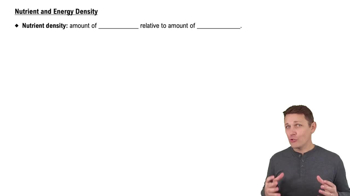
 05:24
05:24