Skip to main content
Nutrition
My Course
Learn
Exam Prep
AI Tutor
Study Guides
Flashcards
Try the app
My Course
Learn
Exam Prep
AI Tutor
Study Guides
Flashcards
Try the app
Back
Healthful Eating quiz
You can tap to flip the card.
What does adequacy mean in the context of a healthful diet?
You can tap to flip the card.
👆
What does adequacy mean in the context of a healthful diet?
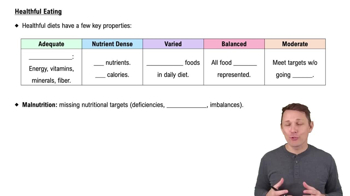
Adequacy means getting enough of all essential nutrients, including energy, vitamins, minerals, and fiber, to meet your body's needs.
Track progress
Control buttons has been changed to "navigation" mode.
1/15
Related flashcards
Related practice
Recommended videos
Healthful Eating definitions
Healthful Eating
14 Terms
Healthful Eating exam
Healthful Eating
29 Terms
Healthful Eating quiz #1
Healthful Eating
10 Terms
Healthful Eating
2. Tools for Healthful Eating
10 problems
Topic
Three Guides to a Healthful Diet
2. Tools for Healthful Eating
10 problems
Topic
2. Tools for Healthful Eating
4 topics
15 problems
Chapter
05:24
Nutrient and Energy Density
03:38
Healthful Eating
01:55
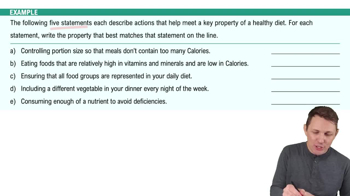
Healthful Eating Example 1
1
views
Terms in this set (15)
Hide definitions
What does adequacy mean in the context of a healthful diet?
Adequacy means getting enough of all essential nutrients, including energy, vitamins, minerals, and fiber, to meet your body's needs.
How is nutrient density defined?
Nutrient density is the amount of nutrients in a food relative to its calorie content.
Why is variety important in a healthful diet?
Variety ensures you consume different foods, which helps prevent nutrient deficiencies and imbalances.
What does a balanced diet include?
A balanced diet includes all food groups in appropriate proportions.
What is meant by moderation in a healthful diet?
Moderation means meeting nutritional targets without consuming excess calories or nutrients.
What is malnutrition and what can cause it?
Malnutrition is missing nutritional targets, which can result from deficiencies, excesses, or imbalances in nutrient intake.
What is undernutrition?
Undernutrition is when you are lacking a specific nutrient or not getting enough calories.
What is overnutrition?
Overnutrition is when you consume too much of a nutrient or too many calories.
What are examples of nutrient-dense foods?
Examples include vegetables, fruits, whole grains, beans, legumes, and fish.
What characterizes foods with low nutrient density?
They are typically high in fat, saturated fat, and added sugars, but low in vitamins, minerals, healthy oils, and fiber.
What are 'empty calories'?
Empty calories are calories from foods that provide little or no other nutrients, such as donuts, soda, and alcohol.
How is energy density defined?
Energy density is the amount of calories in a food relative to its weight.
What types of foods are high in energy density?
Foods high in fat, oil, and added sugars, such as butter, oils, and fried snacks, are high in energy density.
What types of foods are low in energy density?
Foods high in fiber and water but low in fat and added sugars, like fruits and vegetables, are low in energy density.
Why do whole fruits and vegetables have low energy density?
They contain a lot of fiber and water, which add weight without adding many calories.
 BackBack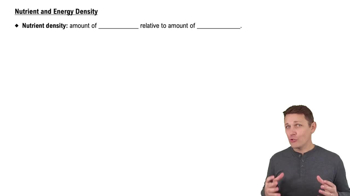
 05:24
05:24