What toxin is found in green potatoes and how can you safely eat a potato that has turned green?
Green potatoes contain solanine, a toxic compound; you can safely eat the potato by cutting off or peeling away the green part.
Why should raw lima beans be cooked before eating?
Raw lima beans contain cyanogenic glycosides, which can produce cyanide; proper cooking destroys this toxin.
Why is it risky to eat wild mushrooms?
Many wild mushrooms produce toxins that can be very dangerous or deadly if consumed.
What is the main danger of staphylococcal toxins in food?
Staphylococcal toxins are heat stable, so even if the bacteria are killed by cooking, the toxins can remain and cause illness.
What illness does botulinum toxin cause and what is a common source?
Botulinum toxin causes botulism, which can result from eating improperly canned foods.
Why should infants under one year old not be fed honey?
Honey can contain Clostridium botulinum spores, which infants' digestive systems cannot handle, potentially leading to botulism.
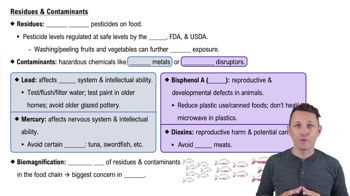
What are residues in the context of foodborne toxins?
Residues are chemicals like pesticides that were used on food but should be present only in very low, regulated amounts when consumed.
How can you reduce your exposure to pesticide residues on fruits and vegetables?
Washing, scrubbing, or peeling fruits and vegetables can further reduce pesticide residue exposure.
What are contaminants and give two examples found in food?
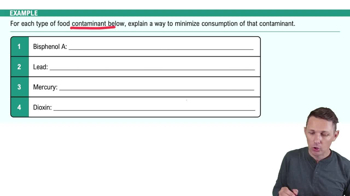
Contaminants are hazardous chemicals that should not be present in food, such as heavy metals (lead, mercury) and endocrine disruptors (BPA, dioxins).
Why are lead and mercury especially dangerous for children and pregnant people?
Lead and mercury can damage the developing nervous system, affecting intellectual ability and development.
What is biomagnification and why is it a concern with certain fish?
Biomagnification is the buildup of toxins in organisms higher up the food chain, making top predators like tuna and swordfish more likely to have high mercury levels.
What is BPA and how can you reduce your exposure to it?
BPA (bisphenol A) is an endocrine disruptor found in some plastics and can linings; you can reduce exposure by using BPA-free products and avoiding heating food in plastic containers.
How do dioxins typically enter the food supply and how can you reduce your risk?
Dioxins are industrial chemicals that accumulate in animal fat; you can reduce risk by avoiding fatty meats and trimming fat from meat.
Which government agencies regulate pesticide residue levels in food?
The EPA sets regulations for pesticide residues, which are enforced by the FDA and USDA.
Why is it not recommended to use hot tap water for cooking or drinking in homes with lead pipes?
Hot water can dissolve and carry more lead from pipes, increasing the risk of lead exposure.
 Back
Back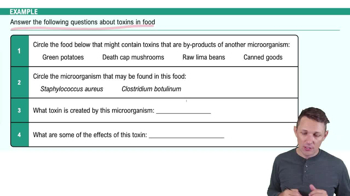
 02:24
02:24