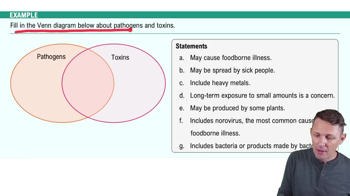
Foodborne illness is sickness caused by ingesting harmful substances in food or water, including pathogens and toxins.
Which groups are most at risk for severe foodborne illness?
The elderly, infants, and immunocompromised individuals are most at risk for hospitalization and death from foodborne illness.
Name the two major categories of causes for foodborne illness.
The two major categories are pathogens (like bacteria, viruses, and parasites) and toxins (hazardous chemicals or contaminants).
What is the most common cause of foodborne illness in the United States?
Norovirus is the most common cause of foodborne illness in the United States.
Which pathogen causes the most cases of hospitalization and death from foodborne illness in the U.S.?
Salmonella causes the most cases of hospitalization and death from foodborne illness in the United States.
What unpleasant symptoms are commonly caused by foodborne illness?
Foodborne illness often causes diarrhea and vomiting, which can also help spread the illness.
What is fecal-oral contamination?
Fecal-oral contamination is the ingestion of small amounts of fecal matter, often due to poor hygiene, which can spread foodborne illness.
What are toxins in the context of food safety?
Toxins are hazardous chemicals that can be naturally occurring in plants or produced by bacteria, or environmental contaminants like heavy metals and pesticide residues.
Why is long-term exposure to contaminants and residues in food a concern?
Long-term exposure to small amounts of contaminants and residues, such as heavy metals and pesticides, is a concern because it can accumulate and cause health problems over time.
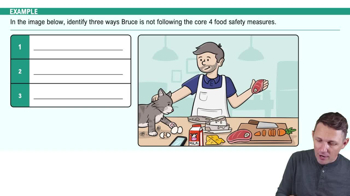
What are the USDA's 'core four' food safety practices?
The core four are: clean, separate, cook, and chill.
What does the 'clean' step in food safety involve?
The 'clean' step involves washing hands and surfaces often with warm soapy water to prevent transferring microorganisms.
How can you prevent cross-contamination when preparing food?
Prevent cross-contamination by keeping raw and cooked foods separate and using different cutting boards for meat and vegetables.
What are the safe internal cooking temperatures for beef/fish, ground meat, and poultry/pork?
Beef/fish should be cooked to 145°F, ground meat to 160°F, and poultry/pork to 165°F.
What is the 'danger zone' for food temperatures, and why is it important?
The danger zone is between 40°F and 140°F, where bacteria multiply rapidly, so food should not be kept in this range for long periods.
Which foods and situations are considered high risk for foodborne illness?
High-risk foods and situations include raw seafood, raw milk, picnic or party foods left out, and water or ice in less developed regions.
 Back
Back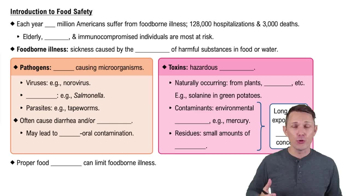
 04:52
04:52