Skip to main content
Nutrition
My Course
Learn
Exam Prep
AI Tutor
Study Guides
Flashcards
Try the app
My Course
Learn
Exam Prep
AI Tutor
Study Guides
Flashcards
Try the app
Back
Food Safety definitions
You can tap to flip the card.
Foodborne Illness
You can tap to flip the card.
👆
Foodborne Illness
Sickness resulting from consuming food or water contaminated with harmful substances, often causing gastrointestinal symptoms.
Track progress
Control buttons has been changed to "navigation" mode.
1/15
Related flashcards
Related practice
Recommended videos
Food Safety quiz
Food Safety
15 Terms
Food Safety
12. Food Safety & Regulation
10 problems
Topic
Foodborne Pathogens
12. Food Safety & Regulation
10 problems
Topic
12. Food Safety & Regulation
6 topics
15 problems
Chapter
04:52
Introduction to Food Safety
02:43
Food Safety Example 1
01:59
Food Safety Example 2
Terms in this set (15)
Hide definitions
Foodborne Illness
Sickness resulting from consuming food or water contaminated with harmful substances, often causing gastrointestinal symptoms.
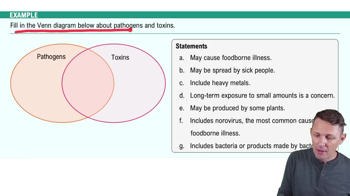
Pathogen
Disease-causing microorganism such as bacteria, viruses, or parasites that can contaminate food and cause illness.
Toxin
Hazardous chemical, either naturally occurring or produced by organisms, that can contaminate food and harm health.
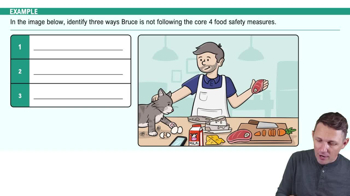
Cross Contamination
Transfer of harmful microorganisms from one food or surface to another, increasing risk of illness.
Danger Zone
Temperature range between 40°F and 140°F where bacteria multiply rapidly, increasing food safety risks.
Core Four
Set of essential food safety practices: clean, separate, cook, and chill, recommended to prevent foodborne illness.
Residue
Trace amounts of substances like pesticides remaining on food after processing, posing long-term health concerns.
Contaminant
Unwanted chemical or substance, such as heavy metals, that enters food from the environment and may cause harm.
Pasteurization
Process that heats food, especially liquids, to a specific temperature to destroy harmful microorganisms without major nutrient loss.
High-Risk Food
Item more likely to harbor pathogens or toxins, such as raw seafood or raw milk, increasing the chance of illness.
Fecal-Oral Contamination
Transmission route where microscopic fecal particles are ingested, often due to poor hygiene, leading to illness.
Residue
Small amounts of chemicals, like pesticides, that remain on food after harvesting or processing.
Immunocompromised Individual
Person with a weakened immune system, making them more susceptible to severe foodborne illness.
Thermometer
Instrument used to measure internal food temperature, ensuring it reaches levels that kill harmful microorganisms.
Municipal Water
Publicly supplied water, typically treated to be safe for drinking, though safety may vary by region.
 BackBack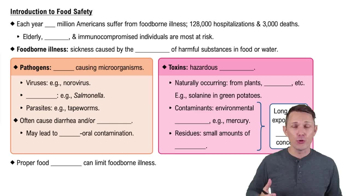
 04:52
04:52