Skip to main content
Microeconomics
My Course
Learn
Exam Prep
AI Tutor
Study Guides
Flashcards
Explore
Try the app
My Course
Learn
Exam Prep
AI Tutor
Study Guides
Flashcards
Explore
Try the app
Back
Who is Affected by Inflation? definitions
You can tap to flip the card.
Inflation
You can tap to flip the card.
👆
Inflation
A widespread rise in prices that reduces the value of money and alters purchasing power across the economy.
Track progress
Control buttons has been changed to "navigation" mode.
1/15
Related flashcards
Recommended videos
Who is Affected by Inflation? quiz
Who is Affected by Inflation?
15 Terms
Guided course
05:58
Who is Affected by Inflation?
Terms in this set (15)
Hide definitions
Inflation
A widespread rise in prices that reduces the value of money and alters purchasing power across the economy.
Price Level
An average measure of prices for goods and services, used to track changes in the cost of living over time.
Fixed Income
A steady monetary payment, such as a pension or lease, that does not adjust for changes in prices.
Purchasing Power
The ability of money to buy goods and services, which declines when prices rise faster than income.
Nominal Income
The amount of money received without considering changes in price levels or inflation.
Real Income
The value of earnings after adjusting for inflation, reflecting true buying capacity.
Saver
An individual who accumulates money, often losing value when inflation outpaces interest earned.
Creditor
A lender who provides funds and faces reduced repayment value when inflation is higher than expected.
Debtor
A borrower who benefits from inflation, as repayments become less costly in real terms.
Flexible Income
Earnings that adjust with price changes, often through contracts or government programs.
Cost of Living Adjustment
A contractual increase in income to match inflation, protecting recipients from rising prices.
Interest Rate
A percentage charged or earned on borrowed or saved money, influenced by inflation expectations.
Nominal Interest
The stated rate on savings or loans, not accounting for inflation’s impact on actual returns.
Real Interest
The effective rate earned or paid after subtracting inflation, showing true gain or cost.
Unanticipated Inflation
A sudden rise in prices beyond expectations, causing losses for those unprepared for its effects.
 BackBack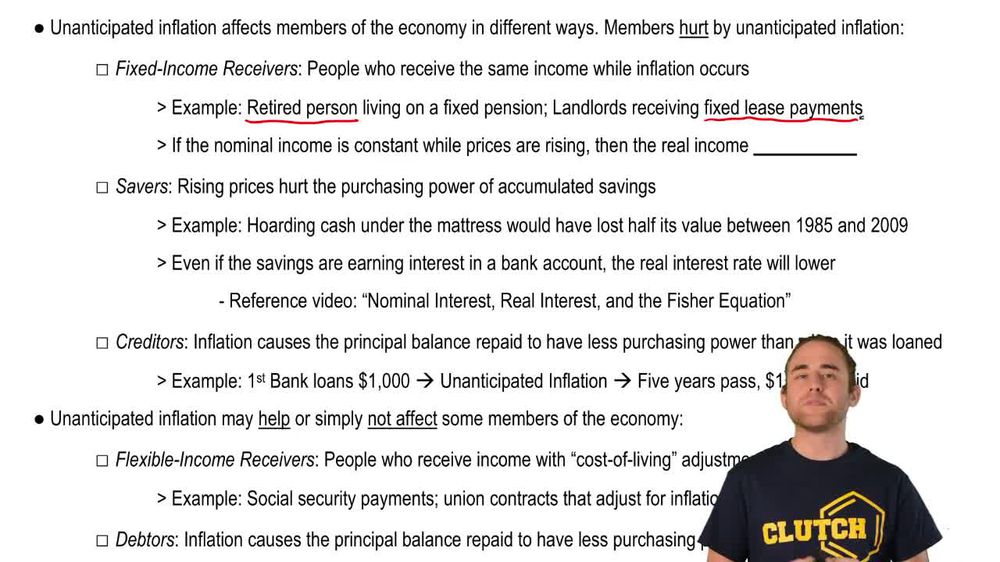
 05:58
05:58