Skip to main content
Microeconomics
My Course
Learn
Exam Prep
AI Tutor
Study Guides
Flashcards
Explore
Try the app
My Course
Learn
Exam Prep
AI Tutor
Study Guides
Flashcards
Explore
Try the app
Back
The Financial Crisis of 2007-2009 (The Great Recession) definitions
You can tap to flip the card.
Subprime Mortgage
You can tap to flip the card.
👆
Subprime Mortgage
High-interest home loan offered to risky borrowers, often with little or no down payment, prone to default during economic downturns.
Track progress
Control buttons has been changed to "navigation" mode.
1/15
Related flashcards
Recommended videos
The Financial Crisis of 2007-2009 (The Great Recession) quiz
The Financial Crisis of 2007-2009 (The Great Recession)
15 Terms
Guided course
10:32
Great Recession
Terms in this set (15)
Hide definitions
Subprime Mortgage
High-interest home loan offered to risky borrowers, often with little or no down payment, prone to default during economic downturns.
Mortgage-Backed Security
Financial asset created by bundling various home loans, generating returns from homeowners' payments, but vulnerable to widespread defaults.
Investment Bank
Financial institution trading assets like stocks and bonds, not insured by government, central in the crisis due to risky investments.
Commercial Bank
Depository institution insured by the government, accepts deposits and provides traditional loans, less exposed to crisis risks.
FDIC Insurance
Government guarantee protecting depositors' funds up to a set limit, preventing bank panics and ensuring financial stability.
Securitization
Process of pooling loans and converting them into tradable financial instruments, enabling risk transfer and secondary market creation.
Shadow Banking System
Network of unregulated financial entities and activities, facilitating credit expansion and risk-taking outside traditional banking.
Default
Failure to meet loan repayment obligations, triggering losses for lenders and undermining financial asset values.
Insolvency
Condition where financial institutions cannot meet their debt obligations, often leading to collapse or government intervention.
Troubled Asset Relief Program
Government initiative purchasing toxic financial assets from banks to prevent systemic collapse and restore market confidence.
Bailout
Emergency financial support provided by the government to failing institutions, aiming to avert broader economic fallout.
Moral Hazard
Situation where entities take excessive risks, expecting government rescue, distorting incentives and undermining market discipline.
Market Failure
Breakdown in efficient allocation of resources, often due to unregulated risk-taking and inadequate oversight in financial markets.
Too Big to Fail
Belief that certain large institutions must be rescued to prevent widespread economic disruption, influencing government policy.
Regulation
Rules and oversight imposed to limit risk, ensure stability, and promote responsible behavior in financial markets.
 BackBack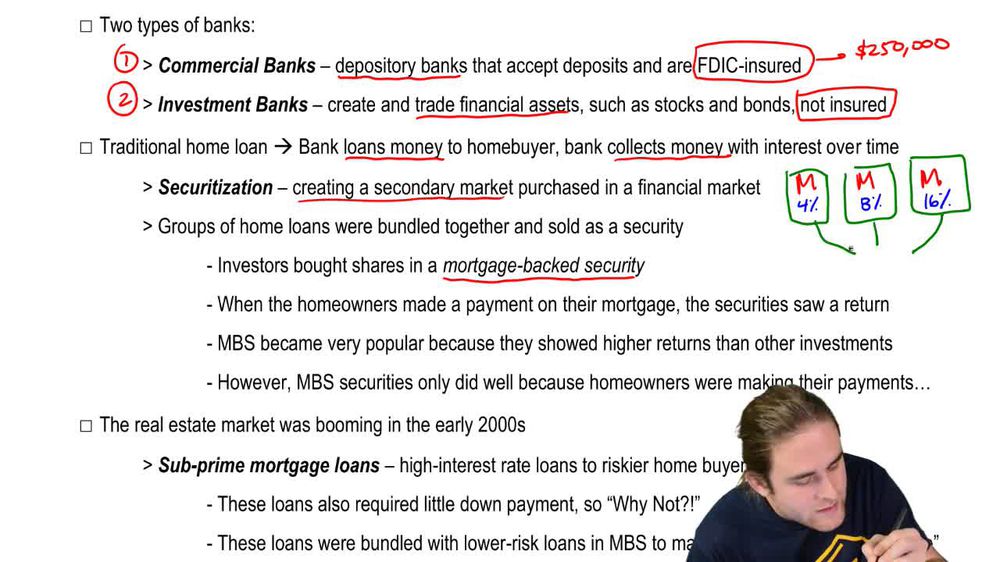
 10:32
10:32