Back

Using the Supply and Demand Curves to Find Equilibrium definitions

Control buttons has been changed to "navigation" mode.
1/15
  • Equilibrium

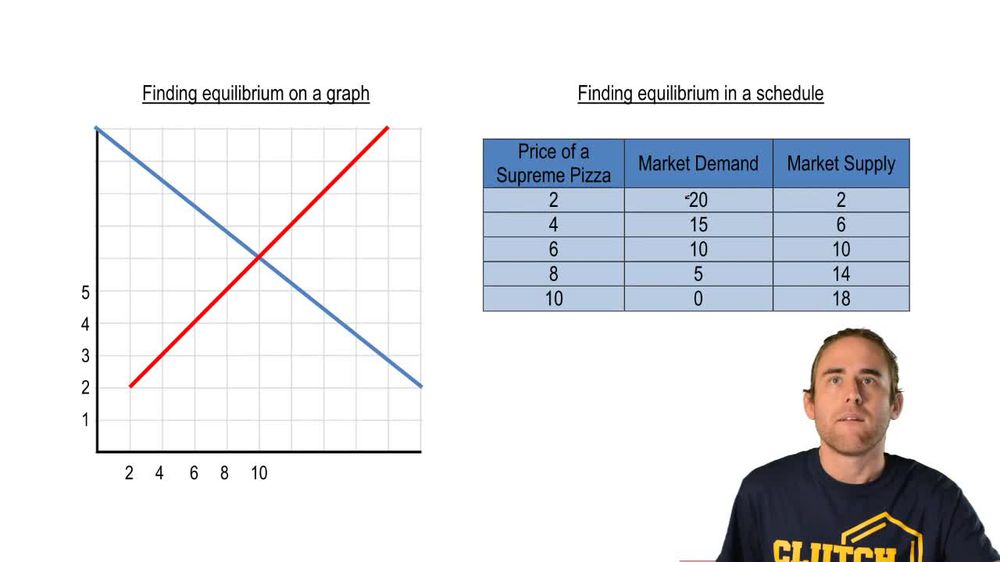
    Occurs at the intersection of supply and demand curves, where market balance is achieved and no tendency for price change exists.
  • Equilibrium Price

    Market value at which quantity supplied matches quantity demanded, denoted as P* and found at the intersection point.
  • Equilibrium Quantity

    Amount exchanged in the market when supply and demand are balanced, labeled as Q* at the intersection.
  • Supply Curve

    Graphical representation showing how producers' willingness to offer goods changes with price, typically slopes upward.
  • Demand Curve

    Graphical line illustrating how buyers' willingness to purchase varies with price, usually slopes downward.
  • Schedule

    Table listing prices alongside corresponding quantities supplied and demanded, used to identify equilibrium without a graph.
  • Surplus

    Situation where quantity supplied exceeds quantity demanded, often resulting in downward pressure on price.
  • Shortage

    Condition where quantity demanded surpasses quantity supplied, typically causing upward pressure on price.
  • Law of Supply and Demand

    Principle stating that market prices adjust to eliminate surpluses and shortages, moving toward equilibrium.
  • Shift

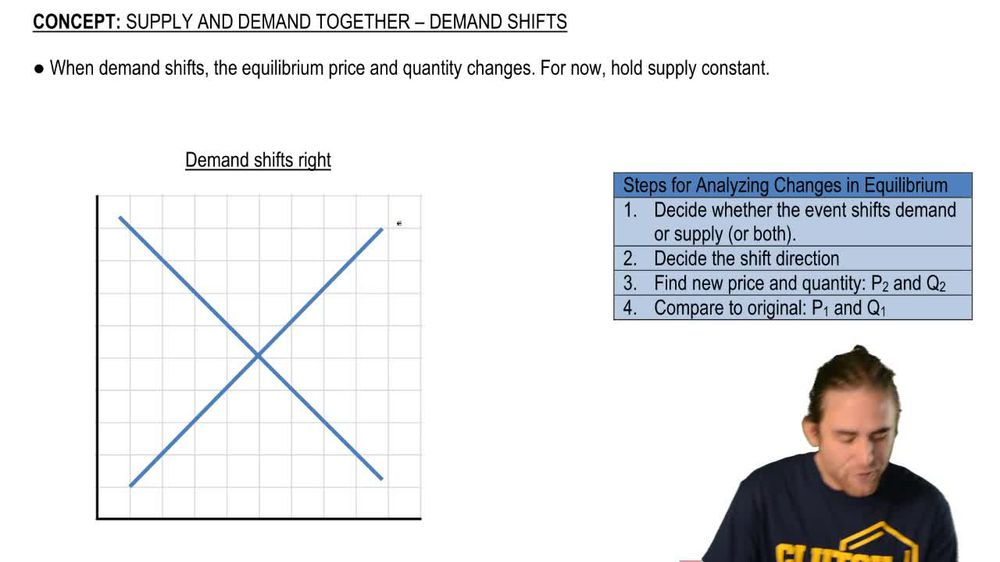
    Movement of supply or demand curve due to external factors, altering equilibrium price and quantity.
  • Double Shift

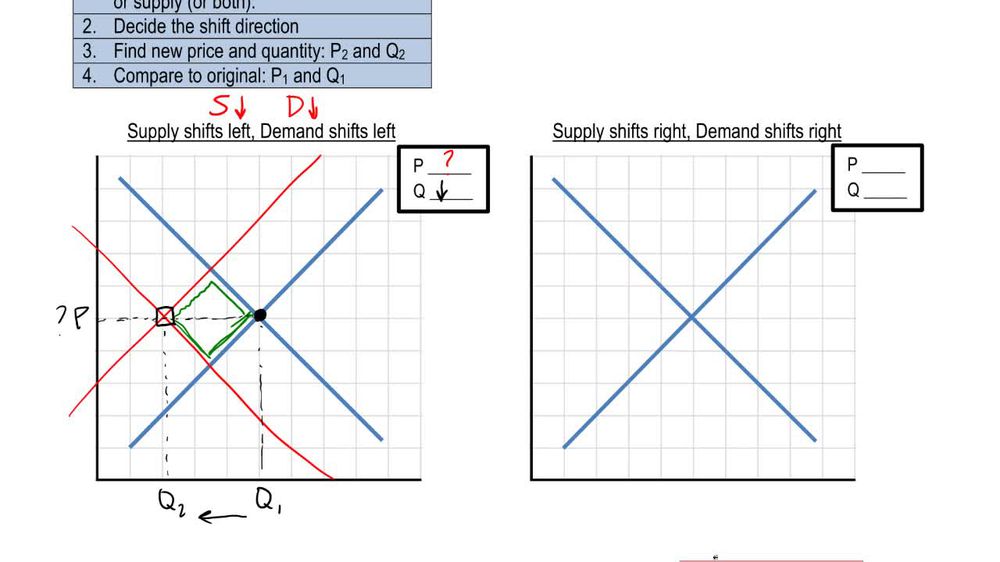
    Simultaneous movement of both supply and demand curves, often resulting in ambiguity for either price or quantity.
  • Ambiguity

    Outcome in double shifts where direction of change for price or quantity cannot be determined without more information.
  • Notation

    Symbols such as P*, Q*, P1, Q1, P2, Q2 used to distinguish original and new equilibrium values after shifts.
  • Intersection

    Point on a graph where supply and demand curves cross, indicating equilibrium conditions.
  • Input Prices

    Costs of resources used in production, changes in which can shift the supply curve and affect equilibrium.