Skip to main content
Microeconomics
My Course
Learn
Exam Prep
AI Tutor
Study Guides
Flashcards
Explore
Try the app
My Course
Learn
Exam Prep
AI Tutor
Study Guides
Flashcards
Explore
Try the app
Back
Savings Equal Investment definitions
You can tap to flip the card.
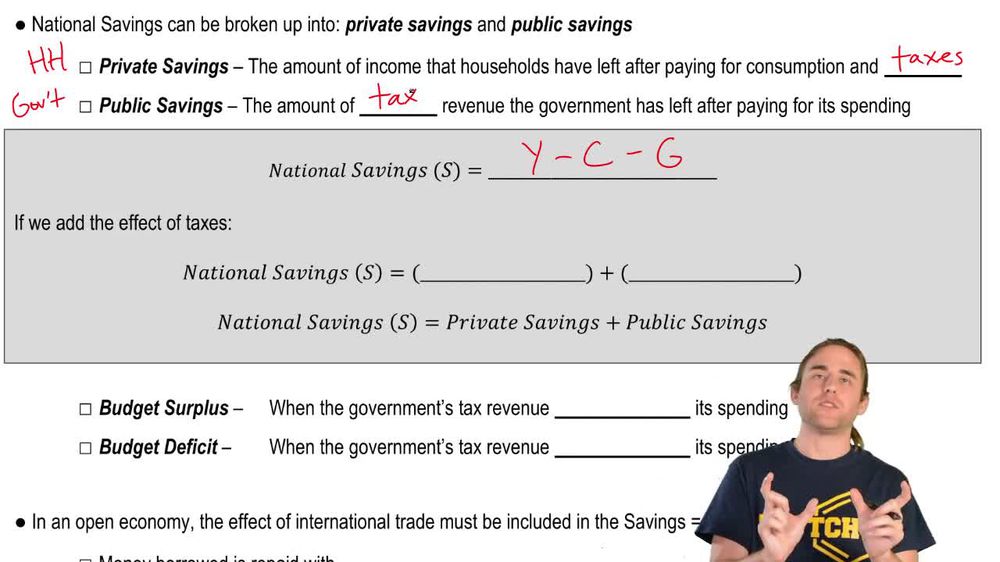
National Savings
You can tap to flip the card.
👆
National Savings
Sum of household and government savings, representing income not used for consumption or government purchases.
Track progress
Control buttons has been changed to "navigation" mode.
1/15
Related flashcards
Recommended videos
Savings Equal Investment quiz
Savings Equal Investment
15 Terms
Guided course
03:56
Savings Equals Investment in an Open Economy
1
views
Guided course
04:53
National Savings, Private Savings, and Public Savings
1
views
Guided course
07:48
Saving Equals Investment
1
views
Terms in this set (15)
Hide definitions
National Savings
Sum of household and government savings, representing income not used for consumption or government purchases.
Private Savings
Income left to households after paying for consumption and taxes, forming part of national savings.
Public Savings
Government’s tax revenue minus its spending, indicating fiscal health and contributing to national savings.
Investment
Resources allocated by firms to increase future output, such as factories or machinery, distinct from financial assets.
Closed Economy
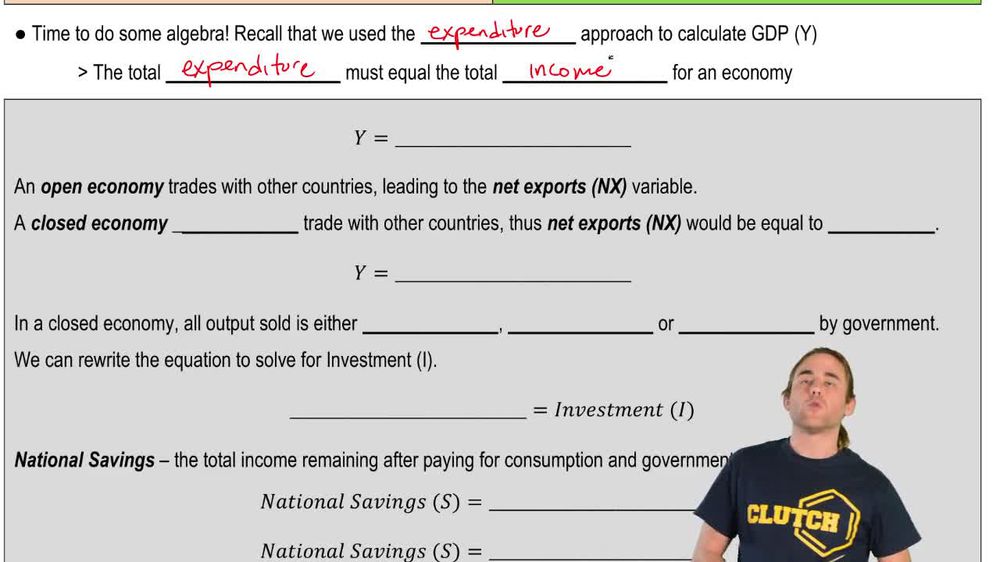
Economic system with no trade with other countries, resulting in net exports equaling zero.
Open Economy
Economic system engaging in international trade, where net exports influence investment and savings.
Net Exports
Difference between exports and imports, affecting national income and investment in an open economy.
Net Capital Inflow
Funds borrowed from abroad to finance domestic investment, arising when imports exceed exports.
Budget Surplus
Situation where government tax revenue exceeds spending, resulting in positive public savings.
Budget Deficit
Condition where government spending surpasses tax revenue, leading to negative public savings.
Gross Domestic Product
Total value of goods and services produced within a nation, calculated using the expenditure approach.
Expenditure Approach
Method for calculating GDP by summing consumption, investment, government purchases, and net exports.
Consumption
Spending by households on goods and services, forming a major component of GDP.
Government Purchases
Expenditures by the government on goods and services, included in GDP calculations.
Trade Deficit
State where imports exceed exports, resulting in borrowing from foreign sources to finance investment.
 BackBack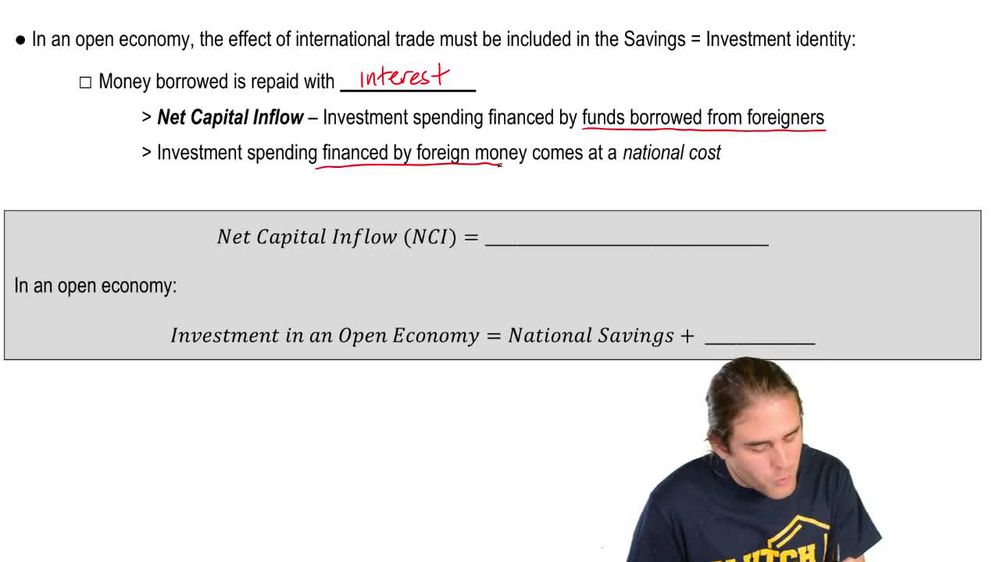
 03:56
03:56