Who developed the new classical model of economics in the 1970s?
Robert Lucas, Thomas Sargent, and Robert Barrow developed the new classical model in the 1970s.
What is a key assumption about wages and prices in the new classical model?
The new classical model assumes that wages and prices are flexible and can adjust quickly to changes in supply and demand.
How does the new classical model view the economy's position relative to potential GDP?
It assumes the economy tends to operate at potential GDP, meaning full employment and full use of available resources.
What is the main difference between the Keynesian and new classical models regarding price flexibility?
The Keynesian model assumes sticky prices and wages, while the new classical model assumes they are flexible.
What concept introduced by the new classical model deals with how people form expectations about the future?
The concept is rational expectations, where firms and workers use available information to predict future economic variables like inflation.
How do rational expectations affect economic decisions in the new classical model?
Firms and workers make decisions today based on their predictions of future inflation and other economic variables.
What happens if actual inflation differs from expected inflation according to the new classical model?
Discrepancies between actual and expected inflation can affect unemployment and inflation, leading to shifts in the short-run Phillips curve.
How does the new classical model suggest stabilizing inflation expectations?
It supports a steady monetary growth rule to help firms and workers make better predictions about future inflation.
What is the relationship between the new classical and monetarist models regarding monetary policy?
Both models agree on the importance of a steady growth rule for the money supply.
Why does the new classical model emphasize a steady growth rule for the money supply?
A steady growth rule helps stabilize inflation expectations, making it easier for firms and workers to plan for the future.
What is the effect of flexible wages and prices on market equilibrium in the new classical model?
Flexible wages and prices allow the market to quickly return to equilibrium after shocks.
How does the new classical model explain the economy's response to recessions?
It suggests that flexible wages and prices help the economy adjust quickly, maintaining full employment.
What role do expectations about inflation play in the short-run Phillips curve in the new classical model?
If expectations about inflation are not met, the short-run Phillips curve shifts, affecting both inflation and unemployment.
How does the new classical model's view of government intervention differ from the Keynesian model?
The new classical model generally sees less need for government intervention, relying on market adjustments, while the Keynesian model supports intervention to address recessions and inflation.
Why is the new classical model called 'new classical'?
It shares many views with the original classical model, such as flexible prices and full employment, but incorporates rational expectations.
 Back
Back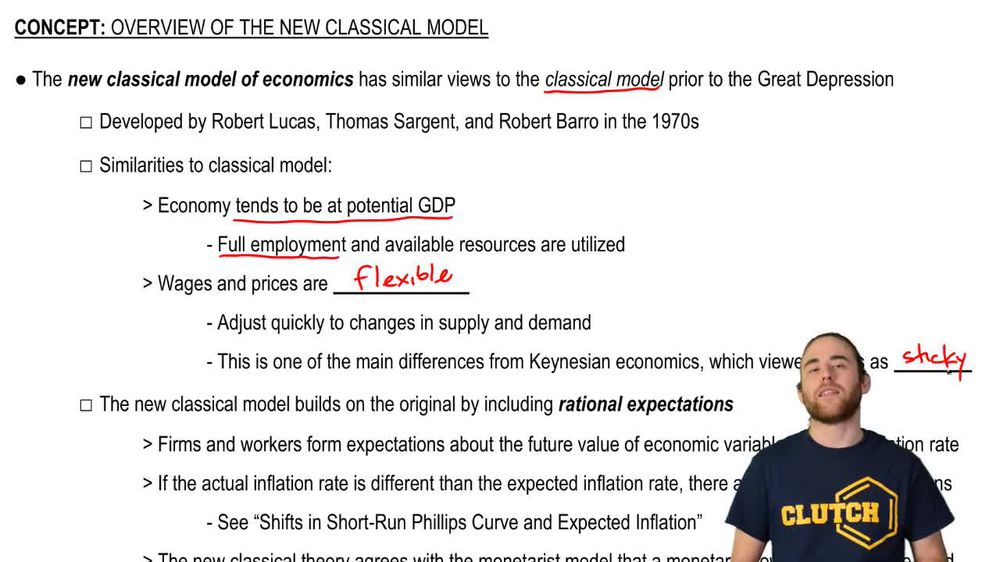
 04:33
04:33