Skip to main content
Microeconomics
My Course
Learn
Exam Prep
AI Tutor
Study Guides
Flashcards
Explore
Try the app
My Course
Learn
Exam Prep
AI Tutor
Study Guides
Flashcards
Explore
Try the app
Back
Long Run Effects of Fiscal Policy definitions
You can tap to flip the card.
Budget Deficit
You can tap to flip the card.
👆
Budget Deficit
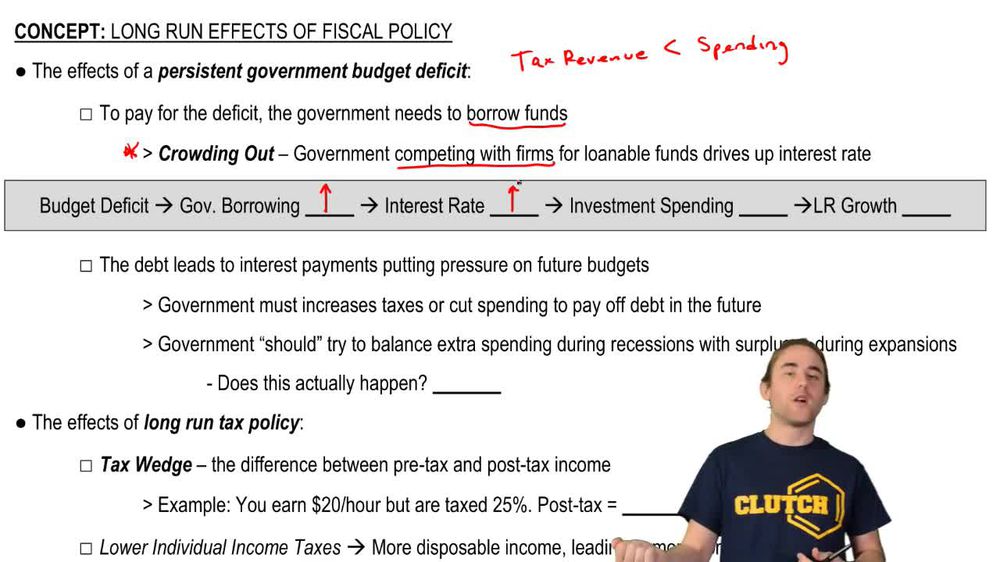
Occurs when government spending exceeds tax revenue, requiring borrowing and leading to higher interest rates and reduced investment.
Track progress
Control buttons has been changed to "navigation" mode.
1/15
Related flashcards
Recommended videos
Long Run Effects of Fiscal Policy quiz
Long Run Effects of Fiscal Policy
15 Terms
Guided course
02:40
Long Run Tax Policy
Guided course
03:39
Persistent Budget Deficit
Terms in this set (15)
Hide definitions
Budget Deficit
Occurs when government spending exceeds tax revenue, requiring borrowing and leading to higher interest rates and reduced investment.
Crowding Out Effect
Government borrowing increases demand for loanable funds, raising interest rates and reducing private investment.
Interest Rate
Represents the cost of borrowing money, influenced by government borrowing and supply of loanable funds.
Investment Spending
Funds allocated by firms for capital goods like factories and equipment, sensitive to changes in interest rates.
Long Run Growth
Sustained increase in an economy’s productive capacity, dependent on capital investment and fiscal policy.
Disposable Income
Amount of income available to households after taxes, affecting consumption and savings.
Tax Wedge
Difference between pretax earnings and post-tax income, impacting incentives for work and investment.
Loanable Funds
Pool of savings available for borrowing by firms and government, determining interest rates.
Capital Investment
Expenditure on assets like factories and equipment, crucial for economic expansion and growth.
Balanced Budget
Situation where government spending equals tax revenue, preventing future tax hikes or spending cuts.
Corporate Taxes
Levies on business profits, influencing investment decisions and returns for firms.
Capital Gains
Profits from the sale of assets, affected by tax policy and influencing savings and investment.
Dividends
Payments to shareholders from corporate profits, subject to taxation and impacting household savings.
Macroeconomic Stability
Condition where fiscal policy maintains steady growth, low inflation, and balanced government finances.
Market Equilibrium
State where supply and demand for loanable funds are balanced, determining the prevailing interest rate.
 BackBack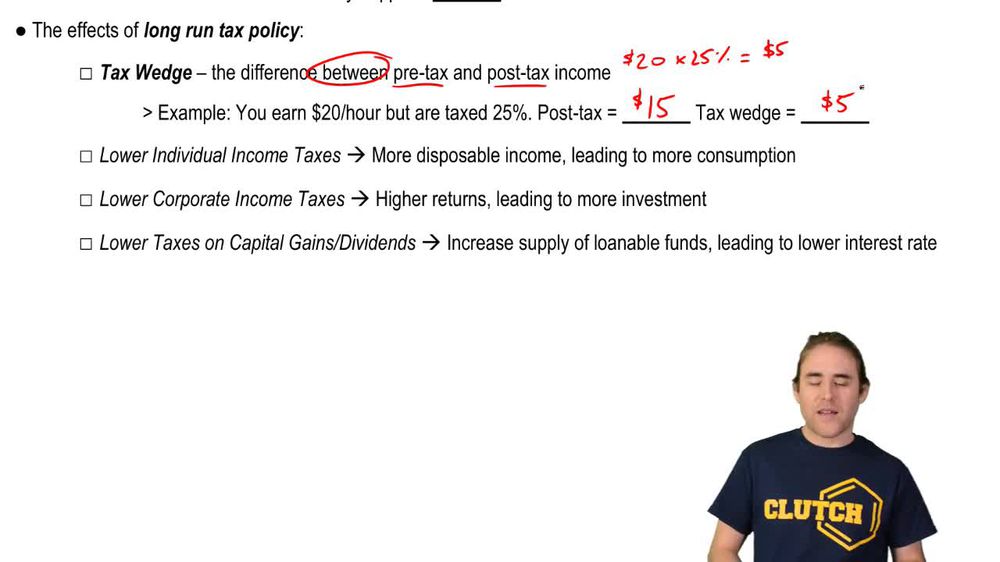
 02:40
02:40